









Precise Surgical Treatment for Simple Anal Fistulas With Careful Sphincter Assessment & Long-Term Healing
Fistulotomy Treatment in Brazil by Dr. Kaiser Jr. is a surgical option for selected patients with simple and superficial anal fistulas. An anal fistula is an abnormal tunnel that develops between the anal canal and the skin surrounding the anus, often after an infection or abscess. It may cause persistent drainage, discomfort, swelling, irritation, or repeated infections. Fistulotomy opens the fistula tract so that it can heal gradually from the inside outward. Dr. Kaiser Jr. evaluates the location of the fistula, its relationship with the anal sphincter muscles, previous treatments, and individual continence risk before recommending this procedure. For complex or recurrent fistulas, other sphincter-preserving techniques may be more appropriate.
🩺 What Is Fistulotomy Treatment?

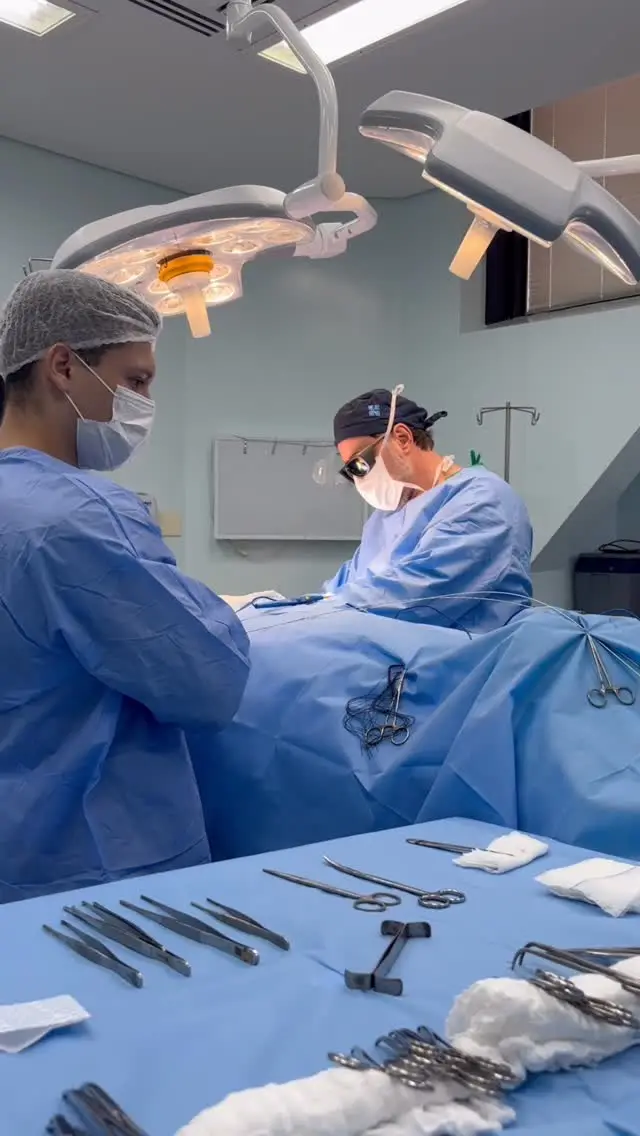
Fistulotomy is a surgical procedure used to treat a simple anal fistula. The surgeon opens the fistula tract along its length, converting it into an open groove that drains and heals from the inside out. It is typically used when minimal anal sphincter muscle is involved. During the procedure, the tract is identified, opened, and cleaned, and the wound is left open to heal naturally. It is generally reserved for simple fistulas to reduce the risk of continence problems. Dr. Kaiser Jr. selects treatment based on fistula complexity and sphincter involvement, using fistulotomy for simple cases and other sphincter-preserving techniques when needed.
🩺 Types of Fistulotomy & Related Anal Fistula Treatments
- Lay-Open Fistulotomy – The fistula tract is surgically opened along its length and allowed to heal from the base outward. This is typically used for simple and superficial fistulas with minimal sphincter involvement.
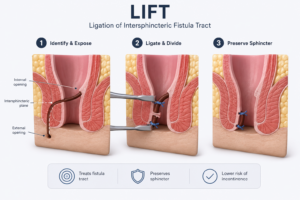
- LIFT (Ligation of the Intersphincteric Fistula Tract) – A sphincter-preserving technique that closes the fistulous connection between the sphincter muscles without cutting through them.
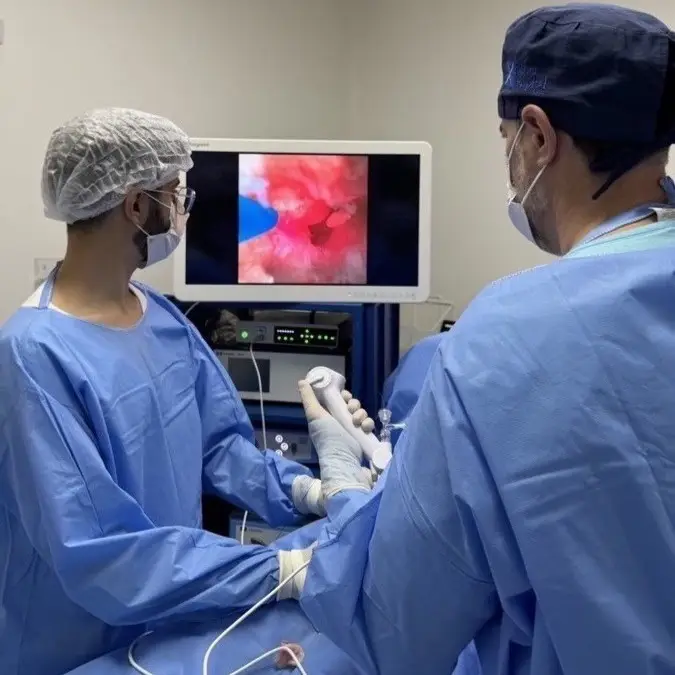
- VAAFT (Video-Assisted Anal Fistula Treatment) – A minimally invasive, sphincter-preserving procedure that uses a fistuloscope to directly visualize and treat the fistula tract, often used in complex or recurrent cases.
🩺 Who Is a Good Candidate?
Fistulotomy Treatment in Brazil may be suitable for patients with a clearly defined, relatively simple anal fistula where opening the tract can be performed without dividing a substantial portion of the sphincter mechanism. Candidate selection is especially important because the safest treatment for one fistula may not be appropriate for another.
✔️ Patients diagnosed with a simple anal fistula
✔️ Individuals with a superficial or low-lying fistula tract
✔️ Patients whose fistula involves little anal sphincter muscle
✔️ Individuals with persistent fistula drainage or repeated local irritation
✔️ Patients experiencing recurrent infections associated with an anal fistula
✔️ Individuals with appropriate baseline anal sphincter function
✔️ Patients without significant pre-existing continence problems

📝 Consultation & Preparation
A detailed consultation is essential before fistulotomy to assess the fistula tract and its relationship with the anal sphincter. Dr. Kaiser Jr. is a general surgeon and proctologist specializing in coloproctology and anal fistula treatment, with colorectal training and international fellowships detailed on his official website.
✔️ Physical examination of the anal and perianal area
✔️ Evaluation of the location of the external fistula opening
✔️ Assessment of previous perianal abscesses or drainage procedures
✔️ Review of any previous fistula surgery or recurrence
✔️ Evaluation of baseline bowel control and sphincter function
✔️ Review of medical conditions, medications, allergies, and previous surgeries
✔️ Review of anesthesia and surgical planning
✔️ Pre-operative laboratory testing when clinically required
🩺 Recovery & Aftercare
Recovery after fistulotomy involves gradual healing of the opened fistula tract from the inside outward, typically over 4 to 8 weeks depending on individual factors, with proper hygiene, diet, and sitz baths helping manage temporary discomfort, drainage, and bleeding during recovery.
✔️ Keep the surgical area clean according to the surgeon’s instructions
✔️ Change gauze or wound dressings as directed by the medical team
✔️ Use warm sitz baths when recommended
✔️ Maintain adequate fluid intake during recovery
✔️ Follow dietary advice designed to help avoid constipation
✔️ Use stool-softening medication only when advised by the treating team
✔️ Avoid excessive straining during bowel movements
✔️ Gradually return to walking and normal daily activities

🌍 Why Choose Dr. Kaiser Jr. and His Hospitals in Brazil for Fistulotomy?
Choosing an experienced colorectal surgeon is essential for anal fistula surgery, as treatment must eliminate the fistula while preserving sphincter function. Dr. Roberto Luiz Kaiser Júnior is a proctologist with over 30 years of experience, trained at Cleveland Clinic Florida and Université Louis Pasteur. He specializes in coloproctology, anal fistula, fecal incontinence, and minimally invasive digestive surgery.

✔️ More than 30 years dedicated to surgical practice, according to his official profile
✔️ Research Fellowship in Colorectal Surgery at Cleveland Clinic Florida
✔️ Clinical Fellowship in videolaparoscopic digestive surgery in Strasbourg, France
✔️ Experience evaluating simple, complex, and recurrent anal fistulas
✔️ Access to fistulotomy and multiple sphincter-preserving fistula techniques
✔️ Treatment selection based on fistula anatomy, complexity, and previous surgery