



















Advanced Pancreatic Cancer Treatment with Multidisciplinary Surgical, Oncology & Digestive Care in Seoul
Pancreatic Cancer Surgery in Seoul, South Korea at Asan Medical Center is designed for patients who need expert evaluation, accurate staging, and a carefully planned treatment approach for pancreatic tumors. Pancreatic cancer is a complex condition that often requires close cooperation between pancreatic surgeons, oncologists, gastroenterologists, radiologists, radiation oncologists, pathologists, and international patient coordinators. At Asan Medical Center, treatment planning focuses on determining whether surgery is appropriate, which surgical method is safest, and whether chemotherapy, radiation therapy, endoscopic treatment, or supportive care should be included. For international patients seeking pancreatic cancer treatment in South Korea, Asan Medical Center offers a highly specialized environment for diagnosis, surgery, recovery, and coordinated follow-up care.
🔍 What Is Pancreatic Cancer Surgery?
Pancreatic Cancer Surgery is a major surgical treatment used when a pancreatic tumor can be safely removed or when surgery is needed to relieve serious symptoms caused by the cancer.

The pancreas is located deep in the abdomen, close to important blood vessels, the bile duct, stomach, small intestine, liver, and spleen. The main goal of pancreatic cancer surgery is to remove the cancer completely when the tumor is considered resectable. This means the cancer appears removable based on imaging tests, tumor location, blood vessel involvement, staging, and the patient’s overall health. Pancreatic cancer surgery may include removing part of the pancreas, the entire pancreas, nearby lymph nodes, and sometimes nearby organs or tissues depending on the location and spread of the tumor. For tumors in the head of the pancreas, a Whipple procedure may be recommended. For tumors in the body or tail of the pancreas, a distal pancreatectomy may be considered. At Asan Medical Center in Seoul, pancreatic cancer care is managed through a multidisciplinary system. Surgery may be combined with chemotherapy, radiation therapy, endoscopic procedures, nutritional support, pain management, and long-term surveillance. The treatment plan is personalized for each patient based on diagnosis, cancer stage, medical condition, and treatment goals.
🩺 Types of Pancreatic Cancer Surgery
- Whipple Procedure – Also called pancreaticoduodenectomy, this surgery is commonly used for tumors in the head of the pancreas and may involve removal of the pancreatic head, duodenum, gallbladder, part of the bile duct, nearby lymph nodes, and sometimes part of the stomach.
- Distal Pancreatectomy – Removes the body and tail of the pancreas when the tumor is located in these areas. The spleen may also be removed depending on tumor location and surgical safety.
- Total Pancreatectomy – Removes the entire pancreas and is considered only in selected cases when cancer affects a larger area of the pancreas and complete removal may require full pancreatic resection.
- Minimally Invasive Pancreatic Surgery – Laparoscopic or robot-assisted approaches may be used in selected patients to perform pancreatic surgery through smaller incisions, depending on tumor location, stage, and surgical complexity.
- Palliative Bypass Surgery – When cancer cannot be completely removed, bypass surgery may help relieve bile duct or digestive blockage, reduce symptoms, and improve comfort.
🩺 Who Is a Good Candidate?
Pancreatic Cancer Surgery may be suitable for patients whose tumor appears removable and whose overall health allows them to undergo major abdominal surgery. A full evaluation is necessary because not every patient with pancreatic cancer is a surgical candidate. The decision depends on imaging results, cancer stage, tumor location, blood vessel involvement, spread to other organs, nutritional status, and heart, lung, liver, and kidney function.
✔️ Individuals with tumors located in the head, body, neck, or tail of the pancreas
✔️ Patients without confirmed distant metastasis
✔️ Patients whose tumor can likely be removed with safe surgical margins
✔️ Individuals with borderline resectable pancreatic cancer after specialist review
✔️ Patients who may benefit from chemotherapy before surgery
✔️ Patients with good enough physical condition for major surgery
✔️ Individuals with controlled chronic conditions such as diabetes or hypertension
✔️ Patients with adequate liver, kidney, heart, and lung function

📝 Consultation & Preparation
Consultation and preparation for pancreatic cancer surgery must be detailed and carefully organized. The medical team needs to confirm the diagnosis, understand the full stage of the disease, and decide whether surgery should happen first or after chemotherapy or radiation therapy. International patients may be asked to provide medical records, imaging scans, biopsy results, blood tests, and previous treatment history before traveling.

✔️ Review of diagnosis, biopsy reports, and previous medical records
✔️ Evaluation of CT, MRI, PET-CT, MRCP, or other imaging results
✔️ Assessment of tumor location within the pancreas
✔️ Review of whether the tumor involves nearby blood vessels
✔️ Staging workup to check for spread beyond the pancreas
✔️ Blood tests including liver function, kidney function, blood count, and tumor markers when required
✔️ Review of jaundice, bile duct blockage, weight loss, pain, appetite, and digestion
✔️ Gastroenterology evaluation for ERCP, EUS, biopsy, or stent placement if needed
✔️ Oncology consultation to determine if chemotherapy is needed before or after surgery
✔️ Radiation oncology consultation when chemoradiation may be part of treatment
✔️ Surgical consultation to determine the safest operation type
🩺 Recovery & Aftercare
Recovery after pancreatic cancer surgery requires close medical supervision because the procedure affects digestion, nutrition, blood sugar control, energy levels, and the healing of internal surgical connections. Hospital stay and recovery time vary depending on the type of surgery, the patient’s condition, and whether additional treatments are required. Patients should expect a structured recovery process with regular monitoring and gradual improvement.
✔️ Hospital monitoring after surgery for bleeding, infection, leakage, and digestive function
✔️ Pain control with prescribed medications and careful medical supervision
✔️ Gradual return to drinking and eating as the digestive system recovers
✔️ Nutrition support to prevent weight loss and improve healing
✔️ Monitoring of blood sugar levels, especially after partial or total pancreas removal
✔️ Pancreatic enzyme support if digestion is affected
✔️ Wound care and infection prevention instructions
✔️ Early movement and walking to reduce clot and lung complication risks
✔️ Pathology review after surgery to confirm tumor type, margins, lymph node status, and staging

🌍 Why Choose Asan Medical Center for Pancreatic Cancer Surgery?
Choosing the right hospital for pancreatic cancer surgery is critical due to the complexity of treatment, requiring precise diagnosis, advanced imaging, expert surgery, and coordinated multidisciplinary care. Asan Medical Center in Seoul offers a specialized Biliary Tract & Pancreatic Cancer Center where experts collaborate to create individualized treatment plans that may include surgery, chemotherapy, radiation, endoscopic procedures, and supportive care.

✔️ Dedicated Biliary Tract & Pancreatic Cancer Center
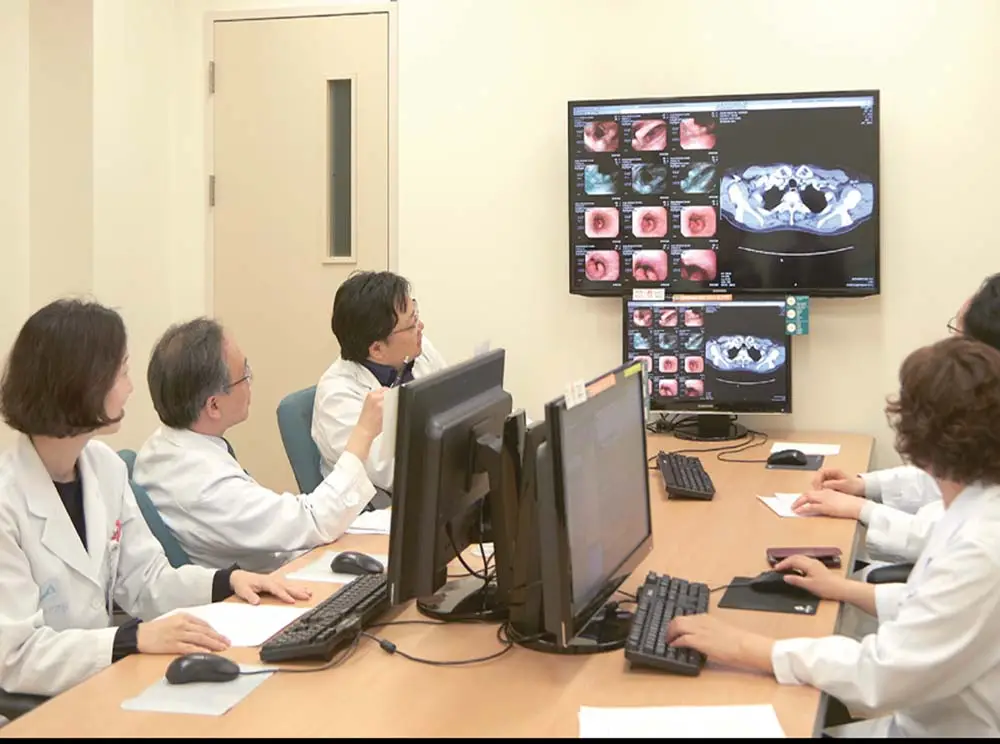
✔️ Multidisciplinary care involving surgery, oncology, gastroenterology, radiology, radiation oncology, and pathology
✔️ Strong experience in complex hepatobiliary and pancreatic surgery
✔️ High surgical volume for biliary tract and pancreatic cancers
✔️ Experience with Whipple procedure and major pancreatic surgery
✔️ Availability of minimally invasive laparoscopic and robot-assisted surgery in selected cases
✔️ Advanced diagnostic tools including ERCP and EUS
✔️ Endoscopic support for jaundice, bile duct blockage, biopsy, and complications