




















Advanced Eye Care for Posterior Vitreous Detachment
Posterior Vitreous Detachment (PVD) is a common age-related eye condition that affects the clear gel (vitreous) inside the eye. As we age, this gel naturally shrinks and pulls away from the retina, often leading to the appearance of floaters or flashes of light in your vision.
At Moorfields Eye Hospital in Dubai and Abu Dhabi, our retinal specialists offer comprehensive diagnosis, monitoring, and patient education to ensure your retinal health is protected. While PVD itself is not usually dangerous, it requires professional evaluation to rule out retinal tears or detachments, which can lead to vision loss if untreated.
❓ What Is Posterior Vitreous Detachment?
The vitreous body is a clear, jelly-like substance that fills the inside of the eye and helps it maintain shape. Over time, this gel becomes more liquid and begins to separate from the retina—the light-sensitive layer at the back of the eye.
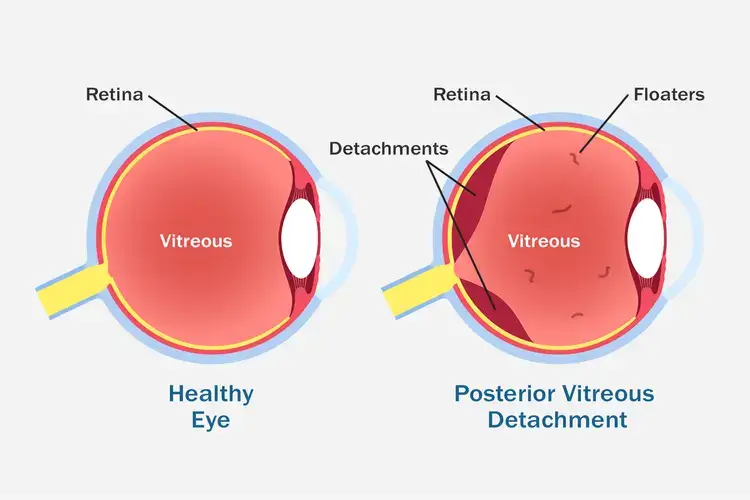
✔️ This separation is called Posterior Vitreous Detachment (PVD).
✔️ It is a normal part of ageing, not a disease.
✔️ However, in some cases, it can cause small retinal tears that may require treatment.
When the vitreous gel pulls away, patients often notice moving dark spots or flashes of light—commonly referred to as “floaters.” These visual effects are usually harmless but can be alarming without proper understanding and medical assessment.
❓ What Causes Posterior Vitreous Detachment?
Posterior Vitreous Detachment occurs primarily as a result of natural ageing, though certain factors can increase the risk or cause earlier onset:
✔️ Ageing: The most common cause; the vitreous naturally liquefies with age.
✔️ Nearsightedness (Myopia): People with high myopia often develop PVD earlier.
✔️ Eye Trauma: Physical injury can accelerate vitreous separation.
✔️ Eye Surgery or Laser Treatment: Procedures like cataract surgery may contribute to earlier PVD formation.
✔️ Diabetic Eye Disease: Can alter the structure of the vitreous and retina.
Most individuals develop PVD after age 50, and it becomes almost universal by age 80.
🔍 Common Symptoms of PVD
Patients may notice:
✔️ Blurred or cloudy central vision.
✔️ Straight lines appearing bent or wavy.
✔️ Difficulty reading or recognizing faces.
✔️ A small gray or dark spot in the center of vision.
These symptoms often progress slowly. Many patients seek help after noticing distortion in one eye, especially when covering the other.

🙋♂️ Who Is a Good Candidate for Posterior Vitreous Detachment Surgery?

✔️ Individuals aged 50 or older experiencing new floaters or flashes.
✔️ People with high myopia (nearsightedness).
✔️ Patients who have had eye injuries or previous retinal conditions.
✔️ Those with a family history of retinal detachment or diabetic eye disease.
Even if symptoms seem mild, a thorough examination ensures peace of mind and early detection of potential complications.
🔍Treatment Options
In most cases, Posterior Vitreous Detachment does not require treatment. The symptoms, such as floaters and flashes, tend to lessen over time as the brain learns to ignore them.
✔️ Observation: Regular monitoring by your retinal specialist ensures no tears develop.
✔️ Patient Education: Understanding warning signs is vital for timely response if new symptoms arise.
✔️ Follow-up Visits: Usually scheduled a few weeks after diagnosis to recheck the retina.
In rare cases where a retinal tear or detachment occurs, laser or cryotherapy treatment may be recommended to seal the retina and prevent vision loss.
🩺 Consultation & Preparation
During your visit to Moorfields Eye Hospital Dubai or Abu Dhabi, your ophthalmologist will:
✔️ Review your symptoms and medical history.
✔️ Perform a detailed retinal examination.
✔️ Explain the difference between normal floaters and warning signs that need attention.
✔️ Provide instructions for self-monitoring and follow-up care.
Bring your current glasses and medication list to help the doctor evaluate your eye health comprehensively.
ℹ️ Recovery & Aftercare

✔️ Most patients do not need surgery and return to normal life immediately after their exam.
✔️ Floaters often fade or become less noticeable within a few months.
✔️ Report any sudden increase in floaters, flashes, or a curtain-like shadow immediately.
✔️ Routine check-ups may be recommended to ensure the retina remains healthy.
Protect your eyes from trauma, manage chronic conditions like diabetes, and maintain regular eye examinations to preserve long-term vision.
🔍 Why Choose Moorfields Eye Hospital UAE?

✔️ Part of Moorfields London, the world’s oldest and most respected eye hospital.
✔️ UK-trained trained specialists experienced in advanced macular and vitreoretinal surgery.
✔️ Cutting-edge technology including OCT imaging and high-resolution microscopes.
✔️ Comprehensive pre- and post-operative care plans for every patient.
✔️ Multilingual team supporting international patients in Dubai and Abu Dhabi.
✔️ Proven surgical success rates and internationally recognized standards of care.
✅ Moorfields UAE provides excellence in medical precision, patient comfort, and visual outcomes.