








Advanced LIFT Surgery for Transsphincteric Anal Fistulas With a Focus on Continence Preservation & Long-Term Healing
Ligation of Intersphincteric Fistula Tract (LIFT) is a sphincter-preserving surgical technique used primarily for transsphincteric anal fistulas. The procedure is designed to close the fistula tract while avoiding division of the anal sphincter muscles, an important consideration when treating fistulas that pass through the sphincter complex. In Brazil, Dr. Kaiser Jr. includes LIFT among the advanced techniques available for individualized anal fistula treatment. Rather than using one surgical method for every patient, the treatment approach is selected according to fistula anatomy, complexity, previous procedures, and the need to protect bowel continence. For appropriately selected patients, LIFT can provide an effective option for treating anal fistula while preserving sphincter function.
🩺 What Is Ligation of Intersphincteric Fistula Tract (LIFT)?
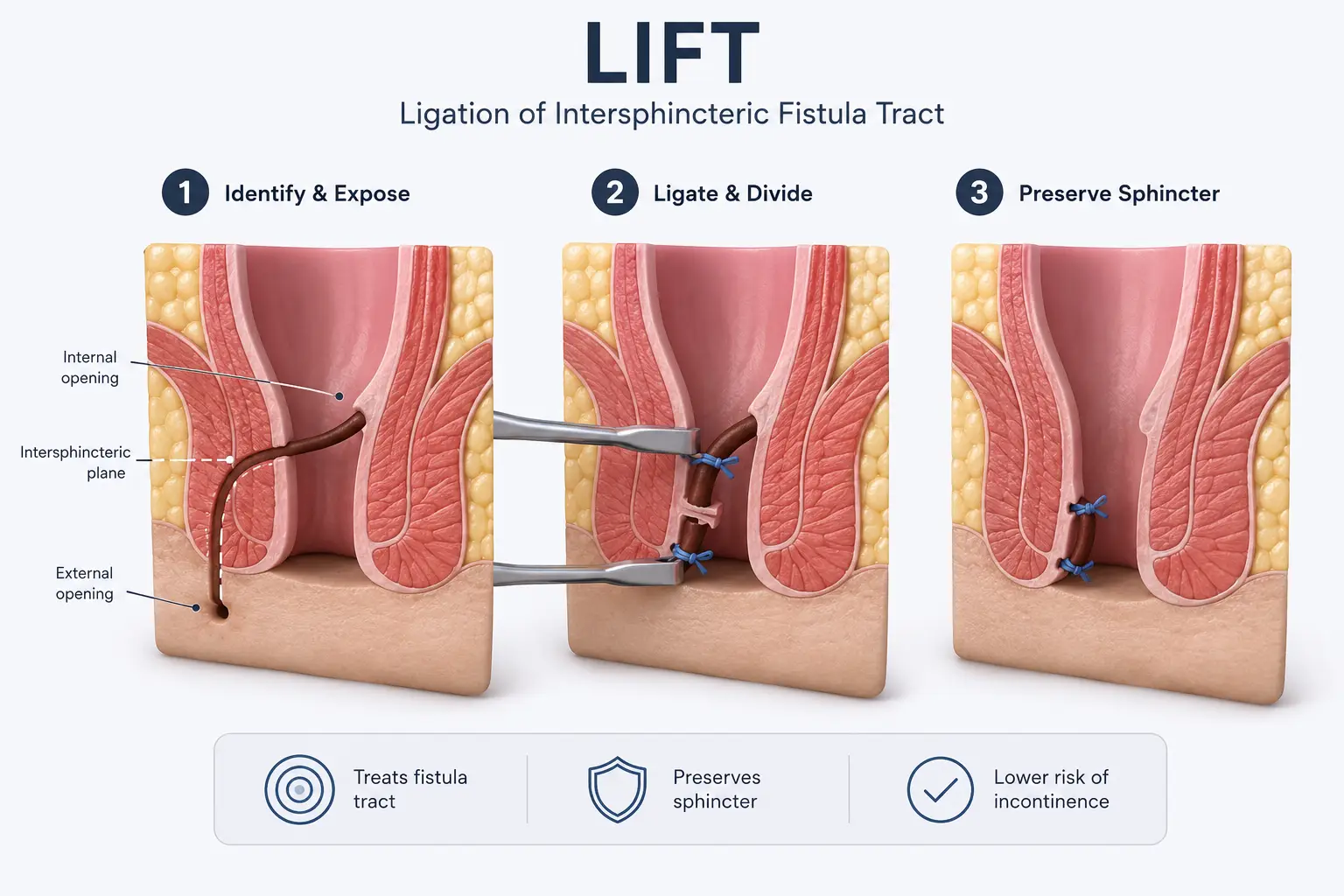
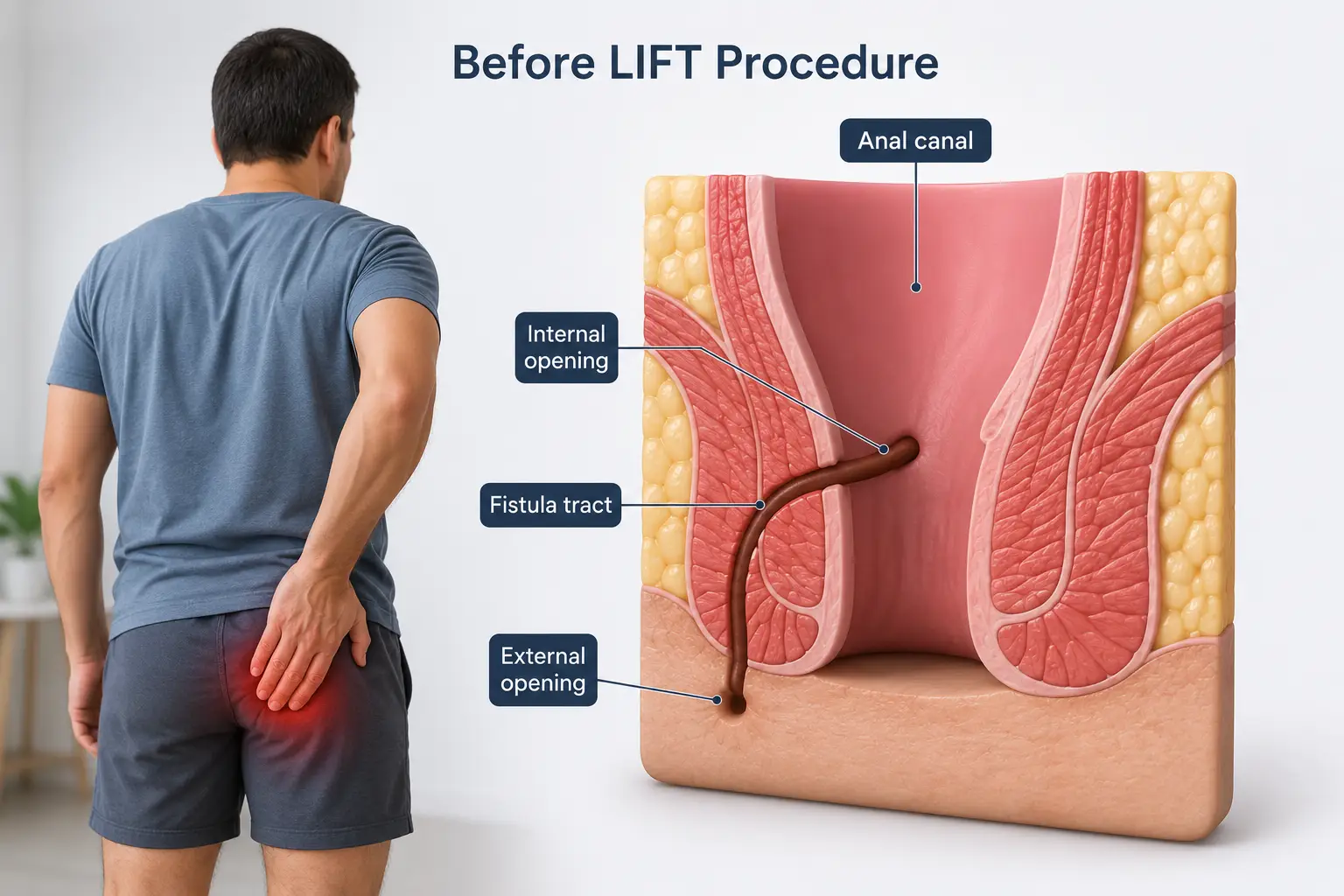
Ligation of Intersphincteric Fistula Tract (LIFT) is a sphincter-preserving surgery for fistula-in-ano, most often used in transsphincteric cases. It is recognized by the American Society of Colon and Rectal Surgeons as a treatment option for these fistulas. The procedure works by accessing the intersphincteric plane between the anal sphincter muscles, identifying the fistula tract, and then ligating and dividing it. This approach treats the fistula without cutting through the external sphincter, aiming to preserve continence while eliminating the infected tract.
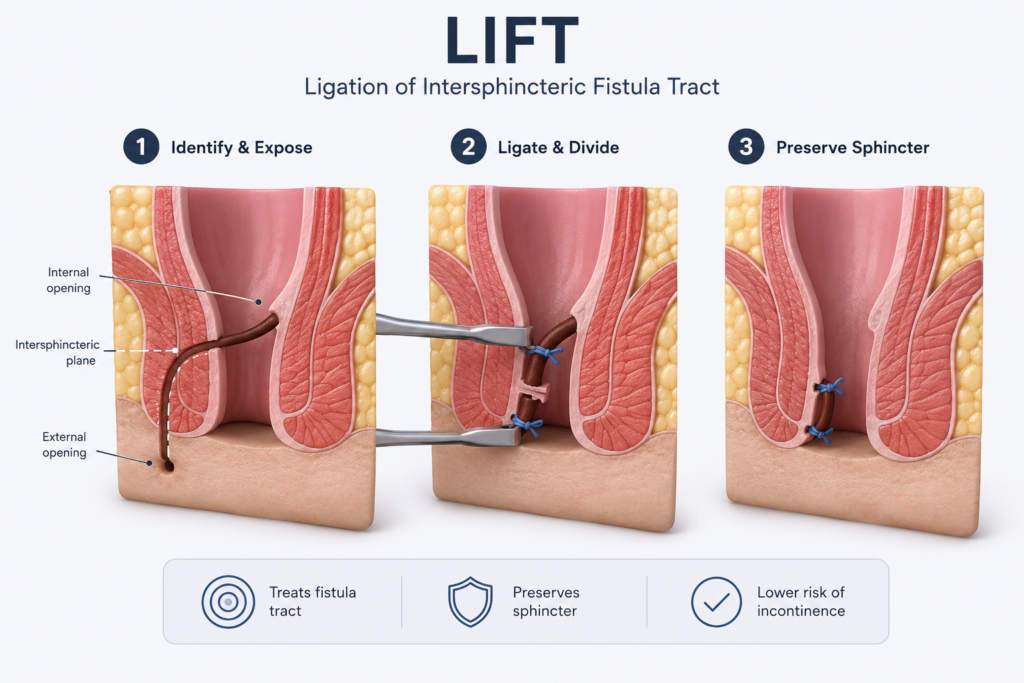
Dr. Kaiser Jr. includes LIFT among several anal fistula techniques such as fistulotomy, VAAFT, FiLaC, fibrin glue, and advancement flap, with the choice depending on fistula type and complexity. Success rates vary, with studies showing about 76% healing overall and low incontinence risk, though recurrence is more common in complex cases such as Crohn’s disease, horseshoe fistulas, or previously operated fistulas.
Careful patient selection is essential. Overall, LIFT is a valuable option for selected transsphincteric fistulas, focusing on healing the tract while preserving sphincter function.
🩺 Types of LIFT and Related Treatment Approaches
- Standard LIFT Procedure – The fistula tract is identified in the intersphincteric plane, isolated, ligated close to its internal component and divided while preserving the surrounding sphincter muscles.
- LIFT After Seton Drainage – In selected patients, a draining seton may be placed before definitive LIFT treatment to control drainage or allow inflammation to settle.
🩺 Who Is a Good Candidate?
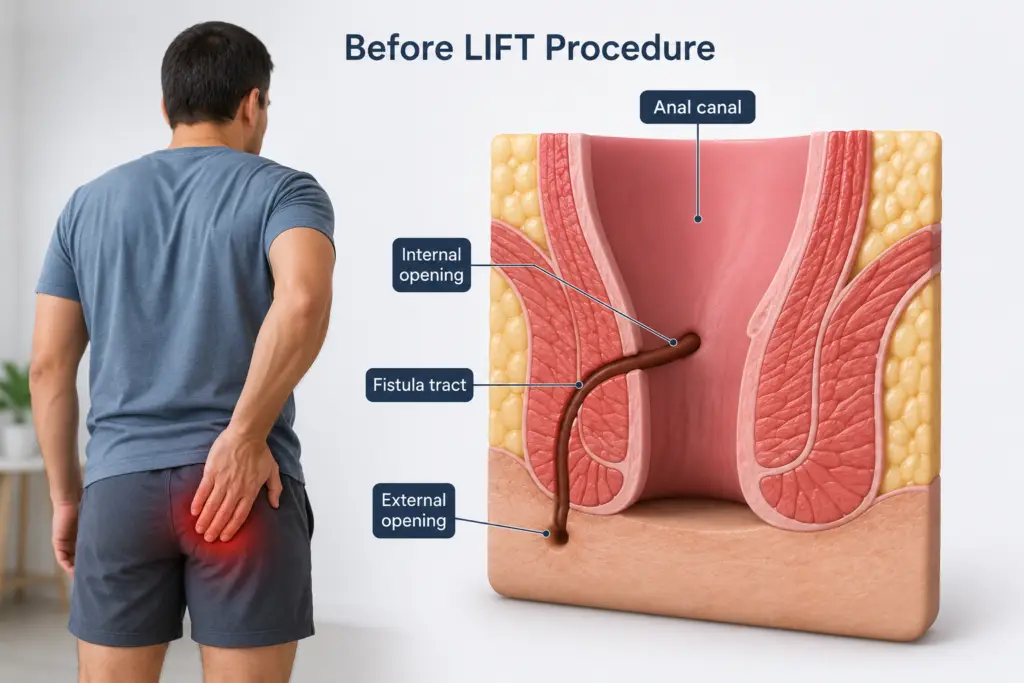
LIFT surgery may be considered for patients with an anal fistula that passes through the sphincter complex and requires a treatment strategy designed to preserve sphincter function. A colorectal or proctology evaluation is necessary because not every anal fistula is best treated with LIFT.
✔️ Patients diagnosed with a transsphincteric anal fistula
✔️ Individuals seeking a sphincter-preserving fistula treatment
✔️ Patients for whom standard fistulotomy could involve excessive sphincter division
✔️ Individuals experiencing persistent anal fistula drainage or recurrent inflammation
✔️ Patients whose fistula anatomy can be clearly identified before or during surgery
✔️ Adults with adequate overall health for surgical treatment
✔️ Patients with controlled local infection before definitive fistula repair
📝 Consultation & Preparation
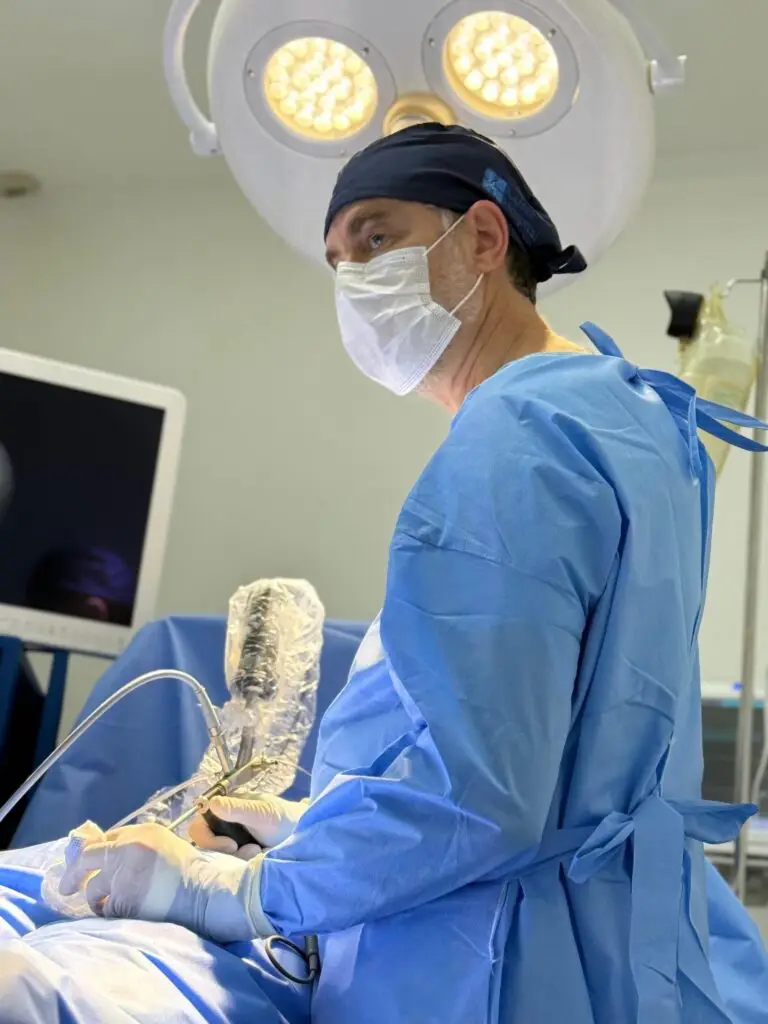
A detailed preoperative assessment is essential before LIFT surgery to accurately identify the fistula tract, internal opening, and its relationship to the anal sphincter muscles. Dr. Kaiser Jr. emphasizes individualized technique selection based on fistula type, complexity, and prior treatment history.
✔️ Assessment of drainage, pain, swelling and previous abscess formation
✔️ Physical and proctological examination when appropriate
✔️ Review of previous fistula, abscess or colorectal procedures
✔️ Evaluation of medical conditions including inflammatory bowel disease
✔️ Review of current medications, allergies and previous anesthesia history
✔️ Imaging such as pelvic MRI or other investigations when clinically indicated
✔️ Identification of fistula anatomy, internal opening and possible secondary tracts
🩺 Recovery & Aftercare
Recovery after LIFT surgery varies depending on fistula complexity, previous procedures and overall health, and because the technique preserves the anal sphincter, recovery focuses on proper healing of the intersphincteric area, maintaining comfortable bowel movements, and may include same-day or short-stay discharge with individualized One Day Surgery planning when appropriate.
✔️ Mild to moderate discomfort may occur during early recovery
✔️ Small amounts of drainage can occur while the treated area heals
✔️ Prescribed pain medication should be taken according to medical instructions
✔️ Patients should keep the surgical area clean and follow wound-care guidance
✔️ Warm sitz baths may be recommended for comfort and local hygiene
✔️ Adequate fluid intake can help maintain comfortable bowel movements

🌍 Why Choose Dr. Kaiser Jr. and His Hospital Network in Brazil for LIFT Surgery?
Choosing an experienced colorectal surgical team is important for anal fistula treatment because it must balance healing with sphincter preservation. Prof. Dr. Roberto Luiz Kaiser Júnior has over 30 years of experience and uses tailored techniques such as fistulotomy, LIFT, VAAFT, FiLaC, fibrin glue, and advancement flap surgery based on individual fistula characteristics.

✔️ More than 30 years of surgical experience listed in Dr. Kaiser Jr.’s professional profile
✔️ Research fellowship experience at Cleveland Clinic Florida
✔️ Clinical fellowship training in videolaparoscopic digestive surgery in Strasbourg
✔️ Brazilian specialist certification in coloproctology
✔️ International membership in the American Society of Colon and Rectal Surgeons
✔️ Experience with multiple sphincter-preserving anal fistula techniques
✔️ Individualized treatment selection based on fistula anatomy and complexity