
















Advanced Urinary Stone Management for Kidney Stones, Ureteral Stones & Complex Urinary Calculi
Xiamen Humanity Hospital offers a comprehensive approach for patients experiencing kidney stones, ureteral stones, bladder stones, and other urinary calculi. Provided through the hospital’s Urology Department in Xiamen, China, Urinary Stone Treatment focuses on conditions that may cause flank or back pain, blood in the urine, painful urination, recurrent urinary infections, nausea, or difficulty passing urine. The department includes calculi management as one of its dedicated subspecialties and combines urinary stone care with broader urological expertise, allowing patients with complex or recurrent stone conditions to receive coordinated evaluation and treatment. The goal of Urinary Stone Treatment is to address the underlying stone condition, relieve symptoms, protect urinary function, reduce the risk of complications, and provide an individualized treatment plan based on the stone’s size, location, characteristics, the patient’s symptoms, and overall health.
🩺 What Is Urinary Stone Treatment?
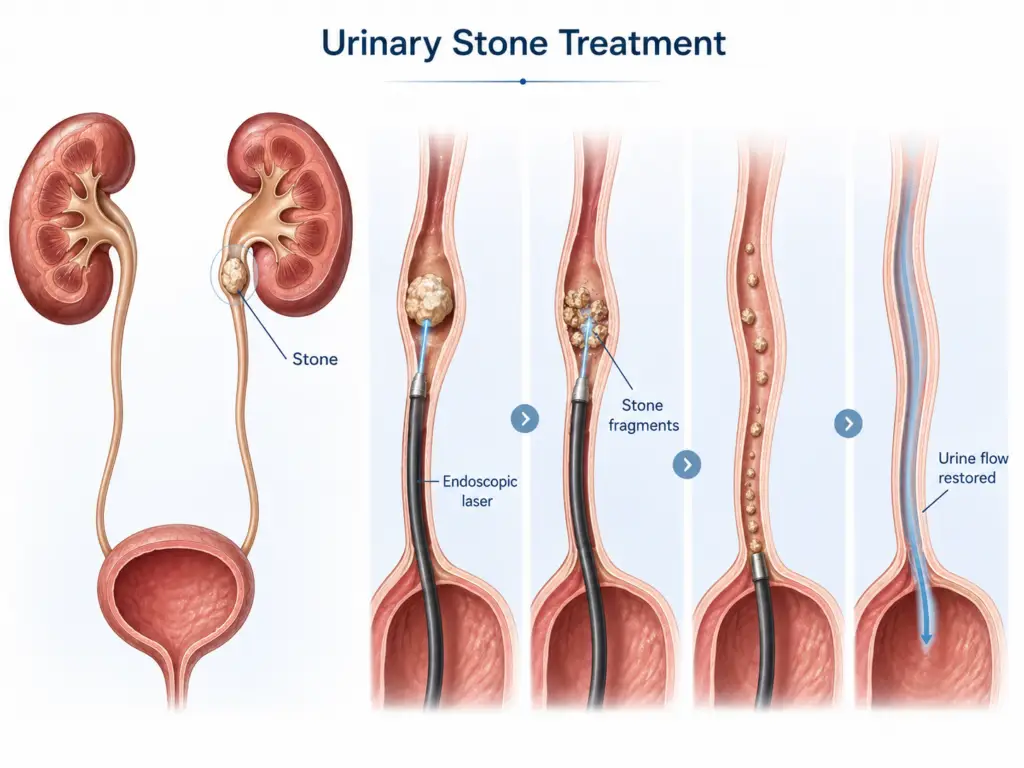
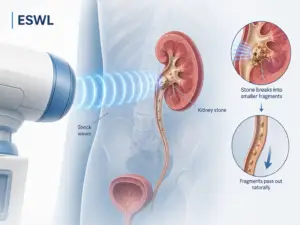
Urinary stone treatment manages stones in the kidneys or urinary tract. Small stones may pass naturally with hydration, pain relief, and medication. Larger stones, persistent pain, obstruction, infection, or recurrent symptoms may require procedures such as shock wave lithotripsy, ureteroscopy, laser treatment, or percutaneous nephrolithotomy.
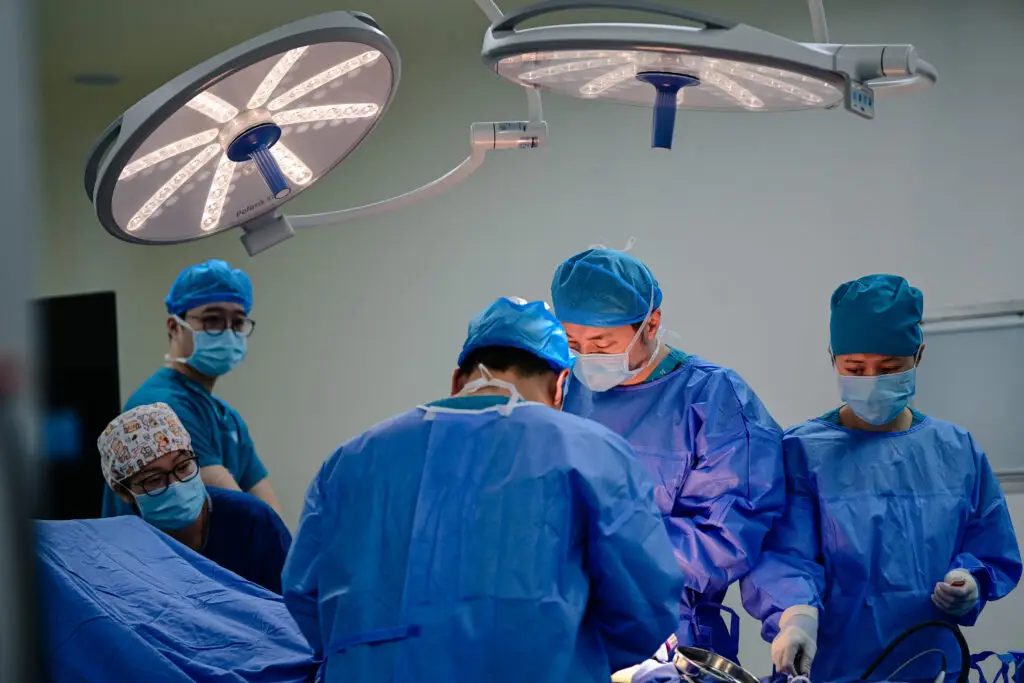
At Xiamen Humanity Hospital, the Department of Urology provides endoscopic laser treatment for complex urinary calculi and minimally invasive stone surgery. Treatment is selected based on the stone’s size, location, and the patient’s condition.
🩺 Who Is a Good Candidate?
Urinary stone treatment may be considered for patients with symptomatic stones, urinary obstruction, recurrent stone problems, or stones that are unlikely to pass safely without intervention. Evaluation by a urologist is important because treatment depends on both the stone itself and the patient’s overall clinical condition.
✔️ Patients with kidney stones causing persistent or recurrent flank pain
✔️ Individuals with ureteral stones that are not passing naturally
✔️ Patients experiencing blood in the urine associated with urinary calculi
✔️ Individuals with painful urination or urinary symptoms caused by a stone
✔️ Patients with stones contributing to blockage of normal urinary drainage
✔️ Individuals with recurrent urinary stone episodes requiring specialist evaluation

📝 Consultation & Preparation
A detailed consultation is essential before urinary stone treatment because the size and location of a stone alone do not determine the best approach. The urology team evaluates the entire urinary system, the severity of symptoms, infection risk, kidney function, previous stone history, and relevant medical conditions before recommending treatment.
✔️ Detailed review of current urinary stone symptoms and pain pattern
✔️ Assessment of previous kidney stones, ureteral stones, or urinary procedures
✔️ Review of existing ultrasound, CT scans, X-rays, or other urinary tract imaging
✔️ Additional imaging when necessary to determine stone size, number, density, and location
✔️ Urine testing to check for blood, infection, and other abnormalities
✔️ Blood tests when required to evaluate kidney function and general health
🩺 Recovery & Aftercare
Recovery after urinary stone treatment varies according to the treatment performed, stone complexity, anesthesia, whether a ureteral stent is used, and the patient’s overall condition. Many endoscopic procedures involve a shorter recovery than conventional open surgery, although temporary urinary discomfort and careful follow-up may still be necessary.
✔️ Temporary burning or discomfort during urination may occur after endoscopic stone treatment
✔️ A small amount of blood in the urine can occur during the early recovery period after some procedures
✔️ Prescribed pain medication should be taken according to the treating doctor’s instructions
✔️ Patients should follow individualized hydration advice provided by the urology team
✔️ Physical activity may need to be reduced temporarily following an invasive stone procedure
✔️ Patients should attend all scheduled urology follow-up appointments

🌍 Why Choose Xiamen Humanity Hospital for Urinary Stone Treatment?
Xiamen Humanity Hospital is a tertiary hospital offering specialized urological care for complex urinary stones, including minimally invasive and endoscopic laser treatments.

✔️ Dedicated Department of Urology with a specific calculi-management subspecialty
✔️ Clinical focus on urinary stone management and minimally invasive urology
✔️ Endoscopic laser treatment available within the department’s expertise for complex urinary calculi
✔️ Urological care led within a department integrating clinical practice, research, and education
✔️ Evaluation of urinary stones according to individual stone characteristics and patient needs
✔️ Access to broader hospital diagnostic and laboratory support when required