

















Advanced Bariatric and Metabolic Surgery for Sustainable Weight Management, Improved Satiety & Better Metabolic Control
Intestinal Bipartition, also known as Transit Bipartition, is an advanced bariatric-metabolic procedure for selected patients with obesity, type 2 diabetes, or insufficient results after a gastric sleeve. It combines stomach reduction with an intestinal connection that creates two pathways for food through the digestive system. By allowing food to reach the lower intestine earlier while still passing through the normal route, it may help regulate appetite, fullness, glucose control, and long-term weight loss. Unlike bypass procedures, it preserves continuity of the natural intestinal pathway. It may be considered when a gastric sleeve alone is not sufficient, but it is more complex and requires careful surgical evaluation. As an emerging technique, its evidence is more limited than established procedures like sleeve gastrectomy and gastric bypass, so patients should be fully informed about benefits, risks, and alternatives.
🔍 What Is Intestinal Bipartition?
Intestinal Bipartition is a laparoscopic bariatric-metabolic procedure that combines a sleeve gastrectomy with an additional connection to a lower part of the small intestine. The sleeve reduces stomach size and may help regulate hunger-related hormones. The surgeon creates an alternate pathway so part of each meal reaches the distal small intestine earlier, while the normal digestive route remains active, forming a “dual pathway” known as bipartition.
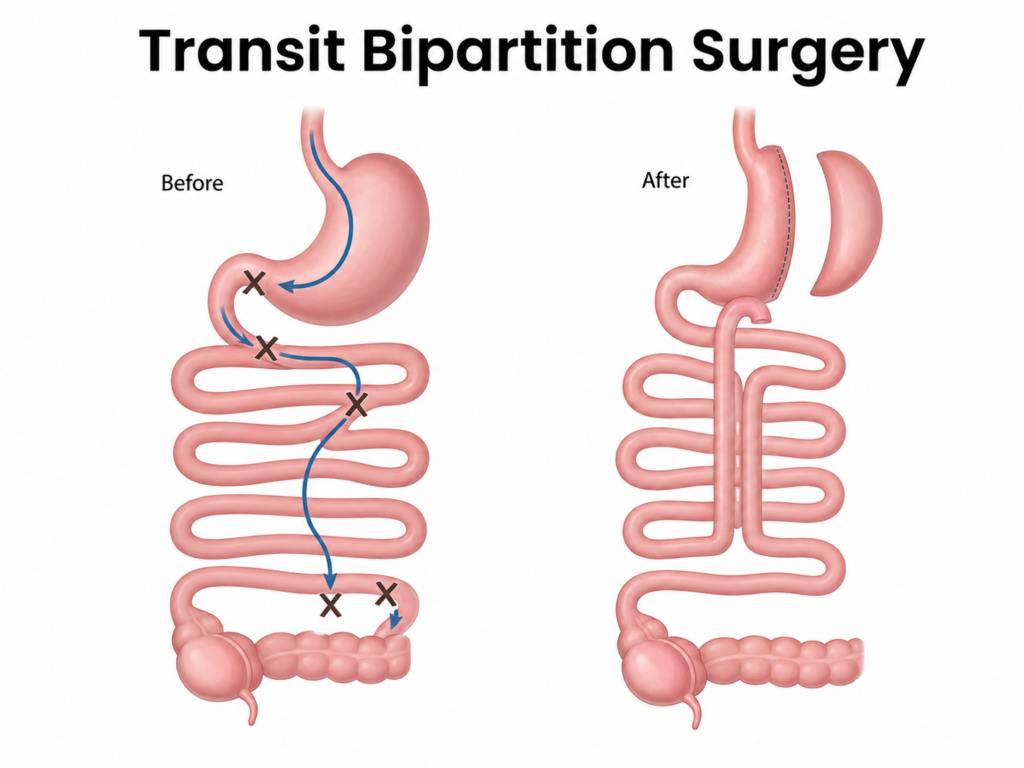
This earlier nutrient exposure may improve satiety and glucose control, supporting weight loss and helping conditions such as type 2 diabetes, hypertension, sleep apnea, and dyslipidemia. Results vary depending on patient factors, technique, and follow-up.
Unlike gastric bypass, food is not fully rerouted away from the upper intestine, but digestion is still altered and may affect absorption, bowel habits, and long-term nutrition. Risks include bleeding, leakage, infection, ulcers, bowel obstruction, blood clots, reflux, diarrhea, and nutritional deficiencies. Outcomes depend strongly on surgical experience and individualized planning.
🩺 Types of Intestinal Bipartition
- Sleeve Gastrectomy with Transit Bipartition – This primary procedure combines a newly created gastric sleeve with an intestinal connection. It may be considered for selected patients who require both stomach-volume reduction and an additional metabolic effect.
- Second-Step Intestinal Bipartition After Gastric Sleeve – The intestinal component may be added after a previous sleeve gastrectomy when the patient experiences a suboptimal clinical response, recurrent weight gain, or persistent obesity-related conditions. The surgeon must assess sleeve anatomy, reflux, eating patterns, and the causes of the patient’s current condition before recommending further surgery.
🩺 Who Is a Good Candidate?
Intestinal Bipartition may be considered for carefully selected adults with obesity and related metabolic conditions, typically following general bariatric surgery guidelines. Because it is an emerging technique, eligibility is more selective and usually reserved for patients with higher BMI or significant metabolic disease who have not improved with nonsurgical treatment.
✔️ Adults with obesity who have not achieved durable improvement through supervised nutrition, physical activity, medication, or other nonsurgical care
✔️ Patients with a BMI that meets accepted bariatric surgery criteria after professional evaluation
✔️ Individuals living with obesity and difficult-to-control type 2 diabetes or insulin resistance
✔️ Patients with obesity-related conditions such as hypertension, sleep apnea, metabolic dysfunction, or abnormal cholesterol levels
✔️ Individuals who may require a stronger metabolic intervention than a gastric sleeve alone
✔️ Patients who previously underwent gastric sleeve surgery and developed recurrent weight gain or a suboptimal clinical response
✔️ Non-smokers or patients willing to stop smoking and vaping before and after surgery

📝 Consultation & Preparation
A comprehensive consultation is essential before Intestinal Bipartition because the operation changes both stomach anatomy and intestinal food flow. Dr. Stefano and the multidisciplinary team must determine whether the potential benefits justify the technical, nutritional, and long-term considerations of the procedure.

✔️ Review of age, height, weight, BMI, weight history, and previous weight-management attempts
✔️ Assessment of type 2 diabetes, insulin resistance, hypertension, sleep apnea, reflux, liver disease, and other obesity-related conditions
✔️ Review of current medications, injectable obesity treatments, diabetes medications, supplements, and known allergies
✔️ Assessment of eating patterns, appetite, portion sizes, emotional eating, alcohol intake, and physical activity
✔️ Full laboratory testing, which may include blood count, kidney function, liver function, glucose, HbA1c, lipids, iron, vitamin B12, folate, calcium, and vitamin D
🩺 Recovery & Aftercare
Recovery after Intestinal Bipartition begins with close hospital monitoring, where the medical team carefully tracks hydration, pain control, breathing, circulation, urine output, and tolerance to liquids while encouraging early walking to support circulation and reduce blood clot risk. Because the procedure involves both stomach reduction and intestinal connections, patients must strictly follow dietary and activity instructions to avoid complications such as dehydration, poor healing, or interference with recovery.
✔️ Early walking under supervision to support circulation and reduce blood-clot risk
✔️ Intravenous fluids, pain relief, nausea control, and other medications as prescribed
✔️ Progression from liquids to puréed foods, soft foods, and regular bariatric portions according to the nutrition plan
✔️ Daily protein and fluid goals to support healing and preserve muscle mass
✔️ Small meals eaten slowly, with careful chewing and attention to fullness signals
✔️ Avoiding carbonated drinks, concentrated sugar, alcohol, and foods not approved by the bariatric team
✔️ Use of acid-reducing medication, blood-clot prevention, or other prescriptions when indicated

🌍 Why Choose Dr. Stefano Sereno Trabaldo for Intestinal Bipartition?
Choosing a qualified bariatric surgeon and a multidisciplinary program is essential for a complex procedure like Intestinal Bipartition, which requires precise planning, advanced laparoscopic skills, careful nutritional assessment, and long-term follow-up. Dr. Stefano Sereno Trabaldo is a bariatric and general surgeon in Guadalajara, and his procedures are performed at Hospital Monte Santo with support from a multidisciplinary care team.

✔️ Board certification in General Surgery and Bariatric Surgery listed in Dr. Stefano’s professional profile
✔️ Fellow of the American College of Surgeons
✔️ Membership in the International Federation for the Surgery of Obesity and Metabolic Disorders
✔️ Advanced training in laparoscopic digestive and obesity surgery at IRCAD in France
✔️ Experience in bariatric, metabolic, gastrointestinal, and general surgery
✔️ Laparoscopic surgical approach designed to reduce the size of abdominal incisions
✔️ Surgery performed at Hospital Monte Santo in Guadalajara
✔️ Postoperative consultations with the surgeon during the initial follow-up period


 Why Choose Dr. Stefano Sereno Trabaldo?