


Losing clear vision due to corneal damage or disease changes everything. Simple tasks like reading, driving, or recognizing faces become difficult or impossible. For many patients across the UK, USA, Europe, and the Middle East, the path to restored vision runs straight through Turkey — not because they had no other option, but because Turkey genuinely offers something their home country cannot: world-class eye surgery at a fraction of the cost, with shorter waiting times and experienced surgical teams.
A cornea transplant, medically known as keratoplasty, replaces a damaged or diseased cornea with healthy donor tissue. It is one of the most performed transplant surgeries globally, and Turkey has built a strong reputation in this field over the past two decades. Turkish ophthalmology centers handle high volumes of corneal surgeries every year, which means surgeons carry real hands-on experience — the kind that only comes from doing this work consistently at scale.
Patients travel to Turkey for cornea transplants for several practical reasons. Waiting lists in countries like the UK or Canada can stretch to months or even years. In Turkey, patients typically move from initial consultation to surgery within a few weeks. The cost difference is also significant — cornea transplant surgery in Turkey costs considerably less than in Western countries, even when you factor in flights and accommodation. That financial reality is hard to ignore when you are dealing with vision loss that affects your daily life.
Beyond cost and speed, Turkey has invested heavily in its healthcare infrastructure. Many eye hospitals are internationally accredited, equipped with modern surgical technology, and staffed by ophthalmologists who have trained or practiced in Europe and the USA. Istanbul, Ankara, and Izmir each have established medical tourism ecosystems with dedicated international patient services, translation support, and aftercare coordination. This is not a country where medical tourism is new — it has been handling international patients for decades.
Cornea Transplant in Turkey — Key Highlights
- Full corneal replacement surgery (PKP) and partial thickness procedures (DSAEK, DMEK) available
- Performed by experienced ophthalmologists in accredited eye hospitals
- Surgery typically scheduled within 2 to 4 weeks of initial consultation
- Significant cost savings compared to the USA, UK, and Germany
- Shorter waiting times for donor tissue compared to many Western countries
- Recommended stay of 7 to 14 days for pre-operative assessment, surgery, and initial recovery
- Suitable for keratoconus, corneal scarring, Fuchs dystrophy, and other corneal conditions
- International patient coordinators available from inquiry through to follow-up
Cornea Transplant Surgery — A Clear Picture of What It Involves
The cornea is the transparent front layer of the eye. It plays a major role in focusing light onto the retina, which is what allows you to see clearly. When the cornea becomes scarred, swollen, irregularly shaped, or diseased, vision becomes blurred, cloudy, or severely distorted. In cases where the cornea cannot be treated with glasses, contact lenses, or medication, a transplant becomes the recommended path forward.
There are different types of cornea transplant procedures, and the right one depends on which layer of the cornea is affected.
Penetrating keratoplasty, or PKP, is the traditional full-thickness transplant. The surgeon removes the entire central portion of the damaged cornea and replaces it with a healthy donor cornea. This procedure is used when damage affects multiple layers of the cornea.
DSAEK and DMEK are partial thickness procedures that replace only the inner layer of the cornea. These are less invasive, carry a faster recovery, and are commonly used for conditions like Fuchs endothelial dystrophy.
DALK — deep anterior lamellar keratoplasty — replaces the front and middle layers of the cornea while leaving the healthy inner layer in place. It is commonly used for keratoconus patients.
Turkish eye surgeons routinely perform all of these procedures. The choice between them is made after a thorough pre-operative evaluation, which includes corneal mapping, slit-lamp examination, and a detailed review of your eye health history. Most surgeries are performed under local anesthesia with sedation and take between one and two hours. Patients are usually able to return to their accommodation the same day or the following morning.
Vision improvement after a cornea transplant does not happen overnight. Initial improvement is noticed within weeks, but full visual stabilization — and final glasses prescription adjustment — can take anywhere from 12 to 18 months following surgery. This is normal and expected, regardless of where the surgery is performed.
How Much Does a Cornea Transplant Cost in Turkey?
Cornea transplant cost in Turkey typically ranges from $2,500 to $6,000 USD per eye, depending on several factors. This compares very favorably against what patients pay in Western countries, where the same surgery often costs between $13,000 and $27,000 or more.
Several things influence where your final cost lands within that range:
Type of procedure — DMEK and DSAEK procedures tend to cost differently from full-thickness PKP. Partial thickness procedures may carry slightly different pricing due to the level of technical precision involved.
Clinic and hospital tier — Ophthalmology Clinics in Turkey with international accreditation and dedicated ophthalmology departments generally charge more than smaller clinics. The facilities, equipment quality, and surgical team experience are usually reflected in the price.
Surgeon experience — Ophthalmologists with subspecialty training in corneal surgery and high surgical volumes may charge more for their time and expertise, which is worth considering when making your decision.
Donor tissue sourcing — The cost and availability of donor corneal tissue can affect overall pricing. Turkey has established tissue banks, but this remains a variable in the overall cost.
Additional tests and pre-operative workup — Corneal topography, pachymetry, and other diagnostic tests required before surgery may or may not be included in the quoted package price.
| Procedure | Turkey (USD) | USA (USD) | UK (GBP) |
|---|---|---|---|
| Full Thickness PKP | $3,500 – $6,000 | $15,000 – $27,000 | £10,000 – £18,000 |
| DSAEK / DMEK | $2,500 – $5,000 | $13,000 – $22,000 | £8,000 – £15,000 |
| DALK | $3,000 – $5,500 | $14,000 – $24,000 | £9,000 – £16,000 |
These figures are general estimates. Your actual cost is determined only after a medical evaluation and formal treatment plan from the surgical team.
Who Is a Good Candidate for Cornea Transplant Surgery?
Not everyone with a corneal condition needs a transplant, and not every patient is immediately ready for surgery. A thorough evaluation is always the starting point. That said, patients who typically benefit most from cornea transplant surgery include:
- People diagnosed with keratoconus that has progressed beyond what contact lenses or cross-linking can manage
- Patients with corneal scarring caused by injury, infection, or previous surgery
- People with Fuchs endothelial dystrophy causing significant vision loss
- Patients with bullous keratopathy where corneal swelling has become persistent and painful
- Those with corneal clouding due to hereditary conditions or prior chemical injuries
- Patients whose previous corneal transplant has failed and requires a repeat procedure
There are also patients for whom surgery may need to be delayed or approached with extra caution:
- Active eye infections or uncontrolled eye inflammation at the time of evaluation
- Uncontrolled glaucoma that has not been adequately managed prior to planning a transplant
- Severe dry eye conditions that have not been treated or stabilized
- Patients with certain systemic health conditions that affect healing or immune response
- Those unable to commit to the required follow-up period, including steroid eye drop regimen
A medical assessment is not a formality — it is the only way to confirm that surgery is the right option for your specific eye condition and that the timing is appropriate.
Your Step-by-Step Journey — From First Inquiry to Clear Vision
Step 1 — Initial Inquiry
You reach out through an inquiry form or consultation request. A patient coordinator contacts you, typically within 24 hours, to understand your condition, ask about your medical history, and explain how the process works.
Step 2 — Medical File and Imaging Submission
You share your existing eye reports, previous prescriptions, corneal topography results, and any other relevant diagnostic records. If you do not have recent tests, guidance is provided on what to get done locally before traveling.
Step 3 — Ophthalmologist Evaluation
Your submitted records are reviewed by the surgical team. Based on this review, an initial assessment is shared with you — including which procedure is likely most appropriate, expected outcomes, and a cost estimate.
Step 4 — Treatment Plan and Quote
A formal treatment plan is prepared and shared with you. This includes the procedure recommendation, the timeline, what the package covers, and the total cost. You can ask questions and request clarifications before committing to anything.
Step 5 — Travel Planning
Once you decide to proceed, your coordinator helps with travel logistics — suggesting arrival dates based on the surgical schedule, recommending accommodation options near the clinic, and providing information about Istanbul or the relevant city.
Step 6 — Arrival and In-Person Consultation
On arrival, you are guided to the hospital or clinic for a comprehensive in-person evaluation. This includes fresh corneal mapping, a slit-lamp examination, intraocular pressure check, and a face-to-face consultation with your surgeon. This is when the final surgical plan is confirmed.
Step 7 — Pre-Operative Preparation
Depending on the procedure and your health, there may be a day of pre-operative preparation including blood tests or medical clearance. Your surgeon and anesthesiologist review everything with you and answer your questions before the operation.
Step 8 — Surgery Day
The procedure is performed in a sterile surgical environment. Most cornea transplants take between 60 and 120 minutes. You are awake but comfortable under local anesthesia and sedation. After a short recovery observation period, you are discharged to your accommodation with a protective eye shield and a detailed medication plan.
Step 9 — Post-Operative Follow-Up in Turkey
You attend follow-up appointments in the days following surgery. The surgical team monitors healing, checks for early signs of rejection or complications, and adjusts your medication if needed. Most patients attend two to four post-operative visits before flying home.
Step 10 — Return Home and Remote Support
After clearance from your surgeon, you fly home. Your coordinator provides documentation for your local eye doctor, including the surgical report and medication instructions. Remote follow-up is available through your Turkish surgical team, and most centers are responsive to questions via email or messaging platforms.
Why Turkey Is Worth Considering for Cornea Transplant Surgery
Turkey sits at a point where cost and quality genuinely meet — which is not something that can be said about every medical tourism destination. Its healthcare system includes a large number of private hospitals that have pursued international accreditation, including JCI accreditation, and regularly handle patients from Europe, the Gulf region, the USA, and beyond.
Turkish ophthalmology has grown into a respected specialty. The country performs a large number of eye surgeries each year across both its public and private hospital networks, which means corneal surgeons build substantial experience over time. Many ophthalmologists working in Istanbul and other major cities completed postgraduate training in Germany, France, the UK, or the USA, and maintain connections with international eye health communities.
From a practical standpoint, Turkey is easy to reach. Istanbul is served by direct flights from most major European cities, the Middle East, and North America. The city has a well-developed medical tourism infrastructure — international patient departments, translation services, hospital-to-hotel transfers, and coordination teams that understand the concerns and questions of patients traveling from abroad.
Recovery in Istanbul is also comfortable. The city offers a range of accommodation options close to the major eye hospitals, from budget hotels to serviced apartments that suit patients who prefer to rest quietly during their stay.
What Is Typically Included in a Cornea Transplant Package
- Pre-operative ophthalmology consultation
- Corneal topography and diagnostic imaging
- Surgeon and anesthesiologist fees
- Operating room and hospital facility fees
- Donor corneal tissue
- Medications and eye drops during the in-Turkey stay
- Post-operative follow-up appointments during your stay
- Patient coordinator support from inquiry through departure
What Is Not Usually Included
- International and domestic flights
- Hotel or accommodation costs
- Airport transfers (unless specifically stated in the package)
- Additional diagnostic tests requested after arrival
- Treatment for pre-existing conditions unrelated to the cornea
- Companion travel and living expenses
- Extended accommodation if recovery requires a longer stay than planned
- Follow-up care in your home country
Recovery and Aftercare After Cornea Transplant Surgery
Recovery from a cornea transplant is a process that unfolds over months, not days. Understanding the timeline helps you plan your trip and set realistic expectations.
In the first week after surgery, your eye will be sensitive to light, and vision will be blurry. This is completely normal. You will wear a protective shield, especially while sleeping, and use prescribed antibiotic and steroid eye drops multiple times daily.
Between weeks two and eight, discomfort tends to reduce. Vision may begin to improve gradually, though it will still fluctuate. Sutures remain in place for several months in full-thickness PKP procedures. During this period, avoiding dusty or smoky environments, swimming, and contact sports is important.
From three months onward, vision continues to stabilize. Sutures in PKP patients are often removed selectively over the following months, and refraction (glasses prescription) gradually settles. Many patients notice meaningful visual improvement by the four to six month mark.
Full visual rehabilitation — meaning your vision has stabilized enough for a final glasses or contact lens prescription — typically occurs between 12 and 18 months after surgery. For partial thickness procedures like DMEK, this timeline is often shorter, with stabilization sometimes occurring within six to twelve months.
Long-term, the results of a successful cornea transplant can last for many years or even decades. Continued use of prescribed eye drops as directed by your eye doctor, protection from eye injury, and regular check-ups are the most important things you can do to protect your outcome.
Risks and Considerations — What You Should Know Before Deciding
Cornea transplant surgery is well-established and generally considered safe when performed by qualified surgeons in appropriate facilities. That said, like all surgical procedures, it carries risks that every patient should understand before making a decision.
Rejection is the most discussed risk in cornea transplants. The immune system can identify the donor tissue as foreign and attempt to reject it. Rejection episodes can often be managed with medication if caught early, which is why follow-up appointments and awareness of rejection warning signs — sudden redness, pain, decreased vision, or light sensitivity — matter significantly.
Infection is a risk during the immediate post-operative period. Antibiotic eye drops are prescribed for this reason, and following the medication schedule carefully reduces this risk substantially.
Astigmatism following full-thickness PKP is common. The curvature of the new cornea may not be perfectly uniform, which can affect the clarity of vision even after healing. This is often managed with glasses, contact lenses, or selective suture removal over time.
Graft failure — where the donated cornea does not function properly or fails over time — is a less common but possible outcome. In some cases, a repeat transplant may be considered.
Choosing a hospital with proper accreditation, a surgeon with verifiable corneal surgery experience, and committing to the full aftercare protocol — including the steroid eye drop regimen — significantly reduces the chance of complications. Patients who are well-informed and engaged in their own recovery consistently have better outcomes than those who discontinue medications early or skip follow-up appointments.
Frequently Asked Questions About Cornea Transplant in Turkey
What is the cost range of cornea transplant in Turkey?
Cornea transplant surgery in Turkey generally costs between $2,500 and $6,000 USD per eye, depending on the type of procedure, the hospital, and the surgeon. This is considerably lower than prices in the USA, UK, or Germany, where the same procedures can cost $13,000 to $27,000 or more. The exact cost for your case is confirmed after a medical evaluation and formal treatment plan.
How long do I need to stay in Turkey for a cornea transplant?
A stay of 10 to 14 days is generally recommended for full-thickness PKP. For partial thickness procedures like DMEK or DSAEK, some patients manage within 7 to 10 days. This allows time for pre-operative assessment, the surgery itself, and the essential post-operative follow-up appointments before you fly home.
Is cornea transplant surgery in Turkey safe?
Yes, when performed at accredited private hospitals with experienced corneal surgeons. Many Turkish eye hospitals hold international accreditations and follow recognized surgical protocols. As with any surgery, safety is tied closely to the quality of the facility and the experience of the surgical team, which is why thorough research and proper vetting of your chosen provider matters.
How long does it take to recover from a cornea transplant?
Basic recovery — meaning you feel well enough to travel home and resume light activities — typically takes one to two weeks. However, full visual recovery and stabilization takes considerably longer, often between 12 and 18 months for full-thickness transplants. Partial thickness procedures tend to have a faster visual rehabilitation timeline.
When will I see the results of my cornea transplant?
Some improvement in vision may be noticeable within weeks, but meaningful, stable improvement is typically seen from three to six months after surgery. A final glasses prescription cannot usually be determined until vision has fully stabilized, which can take up to 18 months following PKP.
Can I fly after a cornea transplant?
Most surgeons clear patients to fly home approximately 7 to 14 days after surgery, once initial healing has been confirmed at a post-operative check. Flying too soon increases the risk of complications, and your surgical team will only provide clearance when it is medically appropriate to do so.
Is a cornea transplant painful?
The surgery itself is performed under local anesthesia with sedation, so patients do not feel pain during the procedure. Post-operatively, patients typically experience mild to moderate discomfort, light sensitivity, and a foreign body sensation in the eye for the first week or two. Most of this is manageable with prescribed medications.
How long does a cornea transplant last?
A successful cornea transplant can last for decades. Many patients maintain good vision for 15 to 25 years or longer with proper aftercare and regular eye check-ups. Partial thickness procedures like DMEK may have a slightly different long-term profile, but outcomes are generally durable with appropriate follow-up care.
What if I need follow-up care after I return home?
Your Turkish surgical team will provide a comprehensive surgical report and aftercare protocol that you share with your local ophthalmologist. Most Turkish eye hospitals with international patient programs remain accessible by email or messaging for remote questions. It is important to establish a relationship with a local eye doctor before your trip so that ongoing care is coordinated smoothly after you return.
Who is not suitable for a cornea transplant?
Patients with active eye infections, uncontrolled glaucoma, severe untreated dry eye disease, or certain systemic conditions affecting immune response or healing may not be suitable candidates at the time of evaluation. Suitability is determined only through a thorough medical assessment — there is no reliable way to confirm candidacy without a proper examination of your eyes and overall health.
Ready to Take the Next Step?
Deciding to have a cornea transplant abroad is not something most people do quickly — and it should not be. It requires honest information, a proper medical evaluation, and confidence that the people guiding you understand both the medical and logistical sides of the process.
If you are exploring cornea transplant surgery in Turkey, the right starting point is a no-pressure consultation where your records are reviewed, your questions are answered, and you receive a treatment plan tailored to your specific condition — not a generic quote.
Getting connected with a patient coordinator who specializes in corneal surgery cases in Turkey means having someone in your corner from the moment you inquire to long after you return home. The goal is not to push you toward a decision — it is to give you everything you need to make the right one.
Reach out to begin the conversation. Share your records, ask your questions, and find out whether Turkey is the right path forward for your vision.
Featured Ophthalmology Procedures in Turkey
Procedures discussed in this article, available across Turkey.
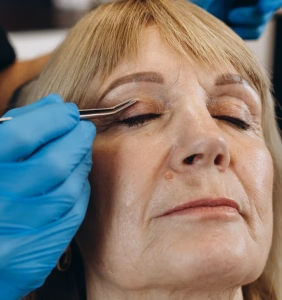
Blepharoplasty in Istanbul, Turkey by Esvita Clinic
Advanced Eyelid Surgery for Brighter Eyes, Smoother Contours & a Refreshed Facial Appearance. Blepharoplasty…

Cataract Surgery in Istanbul, Turkey by Avicenna Hospital
Advanced Cataract Surgery for Clearer Vision, Enhanced Eye Health & Improved Quality of Life. Cataract Surgery…
Recommended Ophthalmology Clinics in Turkey
Trusted clinics specializing in Ophthalmology across Turkey.

Medical Park Hospital
Medical Park Hospital. Turkey’s Largest Private Hospital Network for Advanced Care. Medical Park Hospital is the…

Avicenna Hospital
Avicenna International Hospital Istanbul. Istanbul’s Established Private Hospital Network for Advanced Medical…

Memorial Hospital
Memorial Hospital. Turkey’s Leading Network for Advanced Medicine. Memorial Hospital is Turkey’s most…

Pendik Yüzyıl Hospital
Pendik Yüzyıl Hospital. Comprehensive Healthcare in Istanbul's Asian Side. Pendik Yüzyıl Hospital is a…

Liv Hospital
Liv Hospital. Turkey’s Premier Destination for Advanced Medicine & International Healthcare. Liv Hospital…

International Plus
International Plus. Turkey’s Premium Provider for Aesthetic, Dental, Bariatric & Hair Restoration Care.…
Explore Tours in Turkey
Discover the best places to visit in Turkey and explore its rich culture, breathtaking landscapes, iconic attractions, and unforgettable travel experiences.

Turkey: Private Cappadocia Tour: Hot Baloon Ride & Museum
Embark on a private guided journey through Cappadocia, a land of rich history and natural wonder. Your local…

Turkey: Best of Istanbul Tour with Hagia Sophia Tickets
Step into centuries of history with this expertly guided small group experience through Istanbul’s Old City.…

Turkey: Full Day Pamukkale Tour
Discover the stunning natural beauty and ancient history of Pamukkale on this private guided tour. Marvel at the…

Turkey: Istanbul Guided Walking Tour – Full Day
Private Walking Experience | History, Culture & Iconic Landmarks Walk Through the Heart of Istanbul. Step into…

Turkey: Istanbul Combo: Classic City Tour & Bosphorus Cruise
Experience Istanbul Like a VIP. Step into the heart of one of the world’s most fascinating cities with a private,…

Turkey: Istanbul Guided Tour
Full-Day Private Experience | History, Culture & Comfort Experience Istanbul in One Perfect Day Discover the…
More Ophthalmology Articles About Turkey
Keep reading about Ophthalmology care and travel in Turkey.

Corneal Cross-Linking in Turkey Cost and Clinics
For many people living with progressive keratoconus or post-LASIK ectasia, every month can bring a touch more blur…

Leave a Comment
Share your thoughts on this article, or ask us a question -- we'd love to hear from you.