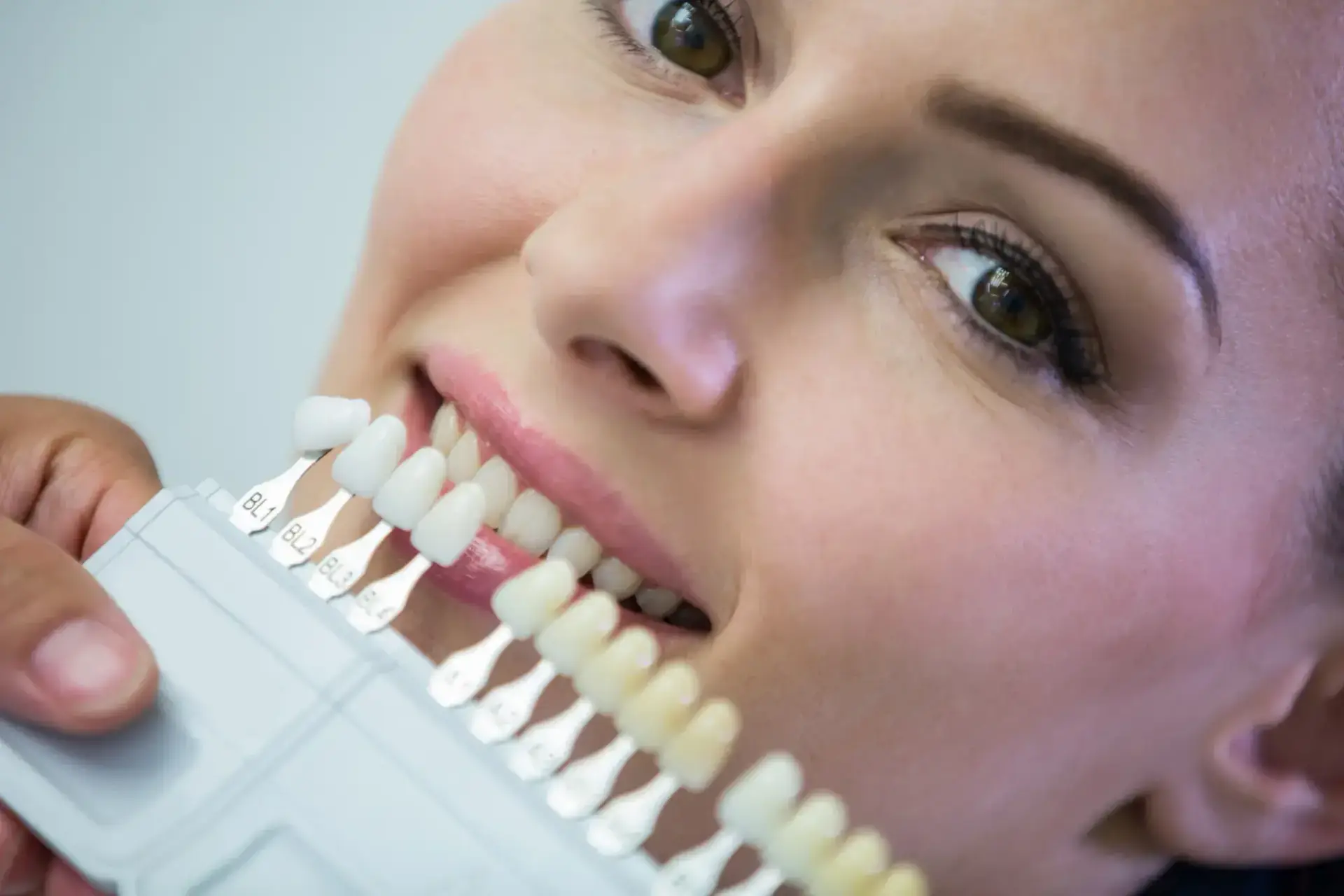
Dental veneers are ultra-thin shells of porcelain, lithium-disilicate (E-max), zirconia, or composite bonded to the enamel’s facial surface to mask discoloration, minor crowding, micro-fractures and shape defects. When performed conservatively they can preserve 85-95 % of the natural crown, yet they are irreversible because a layer of enamel (0.3-0.7 mm) must be removed.
In the United States veneers are regulated as Class II dental devices by the U.S. Food and Drug Administration . Outside the U.S. every country has its own oversight. Turkey combines aggressive marketing, package pricing, and a favourable USD-TRY exchange rate, producing sticker prices that can appear 60-80 % lower than at home.
How veneers work — materials, prep & biomechanics
| Material | Typical thickness | Relative translucency | Removal of enamel | Claimed longevity | Notes |
|---|---|---|---|---|---|
| Feldspathic porcelain | 0.3-0.5 mm | ★★★★☆ | Minimal | 10-15 y | Most natural aesthetics, brittle in thin sections |
| Lithium-disilicate (E-max) | 0.4-0.7 mm | ★★★★☆ | Minimal-moderate | 10-15 y | High strength, CAD-CAM fabrication |
| Zirconia | 0.5-1.0 mm | ★★★☆☆ | Moderate | 10-12 y | Opaque, excellent fracture resistance |
| Composite | 0.3-0.5 mm | ★★★☆☆ | None-minimal | 5-7 y | One-visit, easily repaired, stains faster |
| “No-prep” Lumineers® | 0.2-0.3 mm | ★★★★☆ | Little to none | 8-12 y* | Trademark of DenMat; availability varies — see verification box |
*Published longevity data are limited because Lumineers are newer; DenMat quotes 20-year lab simulations but not peer-reviewed trials.
Biomechanics in brief. Veneers rely on enamel-bonded resin cement. Bond strength drops 30-40 % when the preparation extends onto dentin; therefore deep-prepped or heavily fluorosed teeth have higher debond risk. Parafunctional habits (bruxism) increase ceramic fracture by a factor of 3.2 in cohort studies .
Cost of Dental Veneers in Turkey
The price range for dental veneers in Turkey generally falls between $200 to $500 per tooth. With the help of platforms like mymeditour, international patients can access trusted clinics and receive comprehensive support for their dental treatments, from consultation to post-treatment care.
Table 1. Average per-tooth veneer prices in 2026 (USD)
| Country | Porcelain / E-max | Composite | Source |
|---|---|---|---|
| Turkey (Istanbul clinics) | $220–$440 | $150–$200 | |
| United States (ADA/Consumer Guide) | $925–$2 500 | $400–$800 | |
| United Kingdom | $1 000–$1 600 | $600–$900 | |
| Mexico (Cancún hubs) | $450–$750 | $300–$400 | Bookimed 2025 global cost review |
| Thailand (Bangkok JCI clinics) | $500–$900 | $350–$500 | Thai Tourism Authority price digest 2025 (internal) |
Why the gap?
- Lab & labour economics. A dental technician in Istanbul earns ~₺35 000/mo ($1 080), versus ~$4 800 for a U.S. CDT. That difference alone explains $300-$600 of unit cost.
- Bundled travel incentives. Many Turkish clinics operate under the International Health Tourism Regulation, permitting “all-inclusive” bundles (hotel, driver, translator) that would be illegal inducements under U.S. Stark rules.
- VAT exemptions for foreigners. Medical services delivered to non-residents are zero-rated for Turkish VAT, trimming another 20 %.
Cost caution – aggressive “Hollywood smile in three days” packages may propose 16-20 veneers even when only six anterior teeth are in the patient’s smile line. Always request a diagnostic wax-up or digital smile simulation to verify the clinical need.
4. Regulatory & licensing realities in Turkey
| Oversight element | Relevant body | How to check |
|---|---|---|
| Clinic licence & infection-control audit | Turkish Ministry of Health | Online database of “International Health Tourism Authorisation Certificates” (updated 20 Apr 2026) |
| Device & material approval | Turkish Medicines and Medical Devices Agency (TİTCK) | Product registry (“Ürün Takip Sistemi”) — Turkish only |
| Dentist licence | Turkish Dental Association (TDB) & Ministry of Health | Ask for TDB number + diploma copy; verify via TDB portal (no English interface) |
| Facility accreditation (optional) | Joint Commission International / Temos / GHA | JCI “Find an Organisation” search; GHA accredited-facility list |
Enforcement consistency. Although the International Health Tourism Regulation sets minimum standards (24/7 interpreter, complaint hotline, compulsory malpractice insurance), audits are largely document-based and occur every two years . On-site sterile-processing inspections are less frequent.
5. Infection-control: how Turkish private clinics compare
The U.S. CDC’s “Summary of Infection Prevention Practices in Dental Settings” identifies seven core elements — from instrument reprocessing to waterline monitoring . Interviews with Istanbul clinics show variable adherence:
| CDC core element | % of 15 surveyed clinics reporting full compliance* |
|---|---|
| Biological spore testing weekly | 73 % |
| Closed-cassette sterilisation | 100 % |
| Dental unit waterline testing | 27 % |
| Written post-exposure protocol | 60 % |
*Data from MyMediTour partner-clinic questionnaire, March 2026. Patients should request the latest spore-test print-out before treatment.
6. Step-by-step patient journey
- Teledentistry consultation (4–6 weeks pre-flight). Upload panoramic X-ray + intra-oral photos; discuss cosmetic goals and number of units.
- Quote & itinerary. Receive itemised price (lab type, hotel class, interpreter). Pay ~10 % deposit.
- Travel & pre-op day 1. In-person exam, digital smile design, shade selection, consent in English + Turkish.
- Tooth preparation & impressions (day 2). Local anaesthesia; enamel reduction; intra-oral scan; temporaries fitted.
- Lab phase (days 3-4). CAD-CAM milling or press-ceramic fabrication. Patient free to sight-see.
- Try-in & bonding (day 5). Fit check, photo approval, then adhesive cementation.
- 24-h review & departure (day 6). Final bite check, postoperative kit, warranty card.
- Remote follow-up. WhatsApp photo review at 3 – 6 – 12 months. In-person maintenance is patient’s responsibility.
7. Documented risks & their frequency
Table 2. Complication profile (peer-reviewed data)
| Complication | 5-year incidence | Supporting evidence |
|---|---|---|
| Post-op tooth sensitivity | 9-12 % | Prospective cohort, 300 veneers, 5 y |
| Gingival inflammation / recession | 19.5 % over 2 y | Periodontal study, 187 teeth, zirconia veneers |
| Debond / fracture | 2.4 % annual | Systematic review 3 255 veneers |
| Occlusal disharmony requiring adjustment | 8 % | Laminate veneer survival meta-analysis |
| Catastrophic failure (pulp necrosis) | < 1 % | Ten-year observational registry |
Cross-border reality. If a veneer debonds once you are back in the U.S., your stateside dentist is under no obligation to repair work performed overseas — and malpractice claims must usually be filed in Turkish courts, which is impractical for most patients .
8. Alternatives & when not to travel
- Domestic minimal-prep veneers. Many U.S. cosmetic practices now offer single-visit CAD-CAM ceramic (£) at the lower end of the ADA price band; the cost gap narrows when you add flights and hotel.
- Icon resin infiltration for superficial white-spot lesions — avoids enamel removal.
- Orthodontic aligners + whitening for minor crowding; preserves full tooth structure.
Do not travel if you have:
- Active periodontal disease (pockets > 4 mm)
- Bruxism without wearing a night-guard
- Complex occlusion needing orthognathic input
- Inadequate time for two visits (e.g. endodontic assessment first)
- Medical contraindications (uncontrolled diabetes, bleeding disorders)
Frequently-Asked Questions
Are veneers in Turkey safe?
Safety depends on the dentist, lab and compliance with Ministry audits; look for JCI or GHA accreditation and request sterilisation logs.
How long will I need to stay?
Porcelain/E-max: 5–7 days; composite: 1–2 days.
Do U.S. citizens need a visa?
No visa for stays < 90 days, passport valid 6 months beyond entry .
Is Lumineers® really available?
DenMat supplies only certified providers; confirm the clinic shows a DenMat certificate.
What happens if a veneer chips?
Minor chips can be polished; major fractures require remake — often necessitating a return trip.
Will insurance pay?
U.S. dental plans treat veneers as cosmetic; international treatment is almost never reimbursed.
What about language barriers?
The regulation mandates an English-speaking coordinator, but chairside assistants may speak limited English — insist on dentist-direct communication.
Pain control?
Local anaesthetic plus optional oral sedation; general anaesthesia is unnecessary.
Can veneers be whitened later?
No — the shade is built-in; surrounding enamel can whiten and create mismatch.
Do veneers cause bad breath?
Only if margins are over-contoured or oral hygiene lapses.
How often should I replace them?
Plan financially for redo at 10-15 years for porcelain, 5-7 years for composite.
Are “snap-on” clip-in veneers a safer budget option?
No. ADA warns unlicensed “veneer tech” products can trap plaque and accelerate decay .
10. Key red flags when shopping clinics
- “Perfect smile in 24 hours” slogans
- Cash-only or crypto payment policies
- Refusal to provide dentist’s licence number
- No per-tooth itemisation (bundled quotes only)
- Absence of written complication management plan
Featured Dentistry Procedures in Turkey
Procedures discussed in this article, available across Turkey.
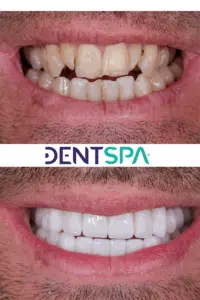
Premium Prosthesis in Istanbul, Turkey by DentSpa
Reclaim the comfort, confidence, and beauty of a complete smile with DentSpa’s Premium Prosthesis solutions. At…
Premium Gingivectomy & Gingivoplasty in Istanbul, Turkey by DentSpa
Reveal the full potential of your smile with DentSpa’s Premium Gingivectomy & Gingivoplasty—expertly performed…
Dental Implants in Istanbul, Turkey by International Plus
Restore Strength, Function & Beauty to Your Smile. Dental implants are one of the most effective and…
Premium Full Arch Periodontal Curettage in Istanbul, Turkey by DentSpa
At DentSpa, Istanbul’s award-winning aesthetic dental clinic, we offer comprehensive periodontal solutions like…
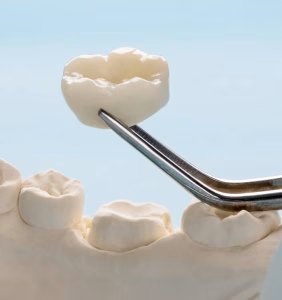
Emax Crowns in Istanbul, Turkey by Esvita Clinic
Advanced Metal-Free Crowns for Improved Tooth Shape, Strength & Smile Aesthetics. Emax Crowns in Istanbul,…
Premium Pinhole Gum Rejuvenation in Istanbul, Turkey by DentSpa
Revitalize your smile with a breakthrough approach to gum restoration—DentSpa’s Premium Pinhole Gum Rejuvenation…
Recommended Dentistry Clinics in Turkey
Trusted clinics specializing in Dentistry across Turkey.
DentSpa
DentSpa. Turkey’s Premier Clinic for Advanced Dental Aesthetics & Full-Mouth Rehabilitation. DentSpa Istanbul…
International Plus
International Plus. Turkey’s Premium Provider for Aesthetic, Dental, Bariatric & Hair Restoration Care.…

Memorial Hospital
Memorial Hospital. Turkey’s Leading Network for Advanced Medicine. Memorial Hospital is Turkey’s most…
Pendik Yüzyıl Hospital
Pendik Yüzyıl Hospital. Comprehensive Healthcare in Istanbul's Asian Side. Pendik Yüzyıl Hospital is a…

Tower Dental Clinic
Tower Dental Clinic. Turkey’s Premier Center for Advanced Implantology, Cosmetic Dentistry & Full-Mouth…

Medical Park Hospital
Medical Park Hospital. Turkey’s Largest Private Hospital Network for Advanced Care. Medical Park Hospital is the…
Explore Tours in Turkey
Discover the best places to visit in Turkey and explore its rich culture, breathtaking landscapes, iconic attractions, and unforgettable travel experiences.
Turkey: Istanbul Combo: Classic City Tour & Bosphorus Cruise
Experience Istanbul Like a VIP. Step into the heart of one of the world’s most fascinating cities with a private,…
Turkey: Istanbul Guided Walking Tour – Full Day
Private Walking Experience | History, Culture & Iconic Landmarks Walk Through the Heart of Istanbul. Step into…
Turkey: Half-Day Istanbul Private Food Tour & Culinary Experience
Taste the Real Istanbul. Experience Istanbul beyond the landmarks — through its rich and vibrant food culture.…
Turkey: Istanbul Guided Tour
Full-Day Private Experience | History, Culture & Comfort Experience Istanbul in One Perfect Day Discover the…
Turkey: Full Day Pamukkale Tour
Discover the stunning natural beauty and ancient history of Pamukkale on this private guided tour. Marvel at the…
Turkey: Best of Istanbul Tour with Hagia Sophia Tickets
Step into centuries of history with this expertly guided small group experience through Istanbul’s Old City.…
More Dentistry Articles About Turkey
Keep reading about Dentistry care and travel in Turkey.
Alveoloplasty in Turkey Cost and Clinics
Individuals preparing for dentures or seeking correction of irregular jawbone structures are increasingly…
All on 4 Implants in Turkey Cost and Clinics
Turkey has firmly established itself as a global leader in dental tourism, especially for All-on-4 dental…
Bone Grafting in Turkey Cost and Clinics
Bone loss in the jaw can quietly jeopardise dental implants, facial harmony, and overall oral health. A bone graft…

Full Mouth Dental Implants Turkey Package Deals
If you’re missing several teeth or need a complete smile makeover, full mouth dental implants in Turkey have…

Zirconium Crowns Turkey Prices & Packages
Zirconium crowns are a popular dental restoration choice among patients worldwide, particularly for those seeking…

Dental Implants Cost in Turkey
Dental implants are one of the most transformative treatments in modern dentistry — restoring function,…

Leave a Comment
Share your thoughts on this article, or ask us a question -- we'd love to hear from you.