





Advanced Non-Surgical Knee Pain Treatment in Osaka for Mobility, Comfort, and Joint Function
Knee pain can gradually affect every part of daily life, from walking and climbing stairs to exercise, travel, and time with family. At Cell Grand Clinic in Osaka, Japan, patients can explore a non-surgical regenerative approach designed for knee pain related to joint degeneration, cartilage wear, inflammation, meniscal damage, and reduced range of motion. This treatment is designed to support the knee joint environment using autologous adipose-derived stem cells, with the goal of helping patients reduce pain, improve movement, and preserve their natural joint.
For many patients, knee pain is not just an occasional discomfort. It can become a long-term limitation that affects independence, activity level, and quality of life. Traditional care may focus on temporary symptom relief or, in more advanced cases, joint replacement surgery. Cell Grand Clinic offers a different pathway for appropriate candidates who want a less invasive option before considering major surgery.
Cell Grand Clinic presents its knee program as a state-of-the-art, non-surgical therapy led by Dr. Yuichi Wakabayashi, with treatment planning tailored to the patient’s condition, imaging results, symptoms, and mobility goals. The clinic emphasizes regenerative medicine, careful cell processing, and outpatient treatment designed for both local and international patients seeking advanced knee pain care in Japan.
🩺 What Is Knee Pain Treatment at Cell Grand Clinic?
Knee pain treatment at Cell Grand Clinic is a regenerative, non-surgical medical approach that uses autologous adipose-derived stem cells. This means the treatment uses stem cells collected from the patient’s own body, processed and cultured, and then administered into the knee joint as part of a customized treatment plan. The clinic positions this therapy as an option for patients who want to address knee pain without hospitalization or traditional knee surgery.
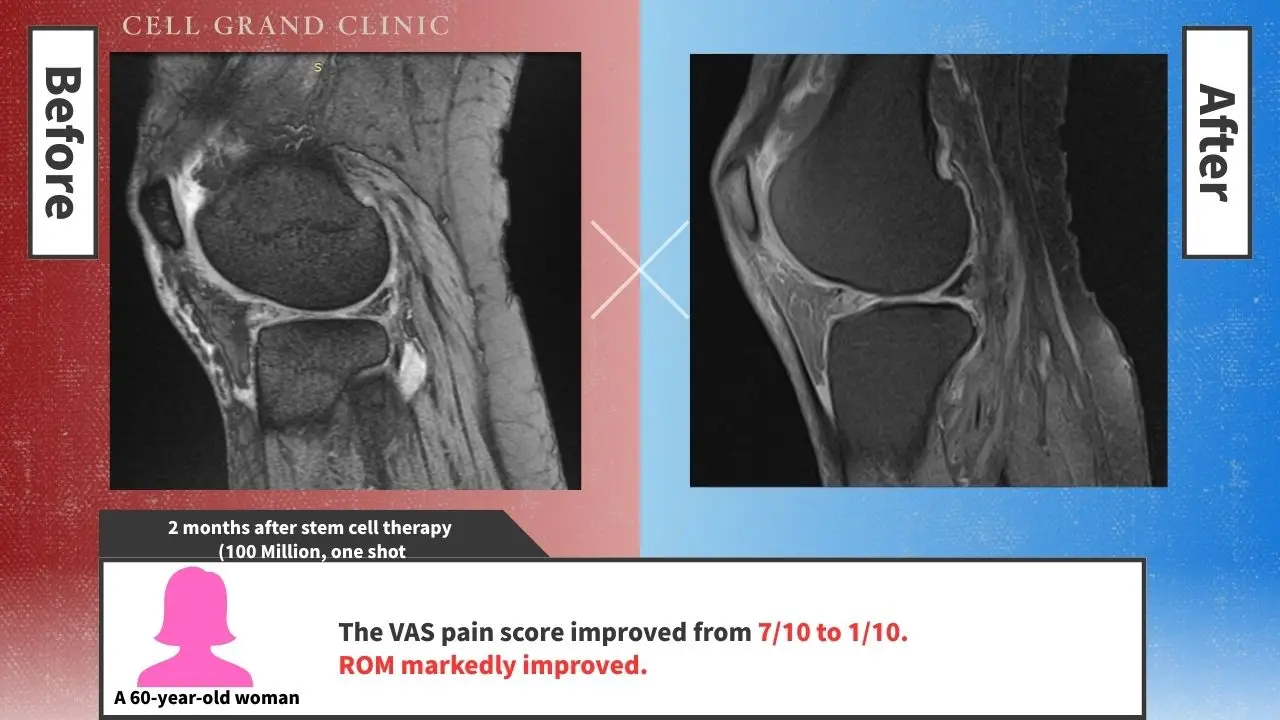
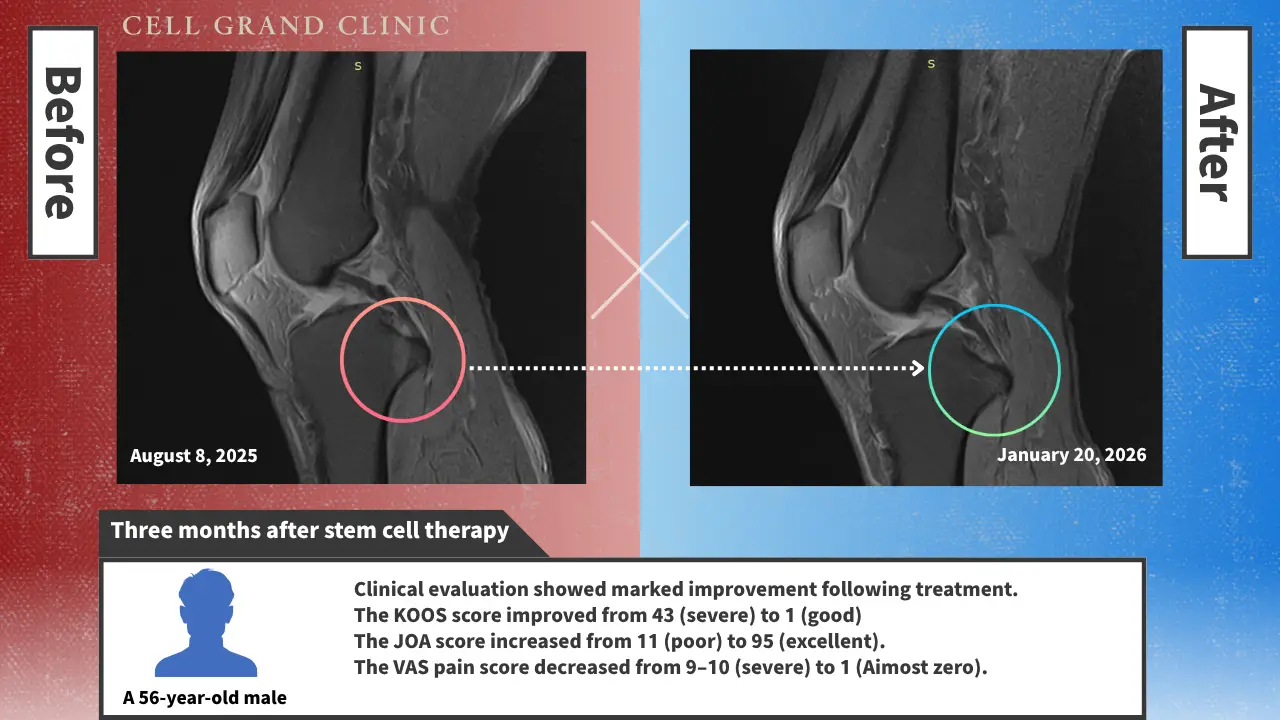
This type of treatment is intended to support the knee joint environment rather than simply provide short-term lubrication. According to the clinic’s materials, the goal is to help manage inflammation, support cartilage-related structures, improve blood circulation within the treatment environment, reduce pain, and enhance range of motion. The treatment is especially relevant for patients dealing with knee osteoarthritis, chronic joint irritation, degenerative changes, and activity-related discomfort that limits daily movement. The process generally includes an initial assessment, a minimally invasive fat harvesting visit, a cell culture period of about seven weeks, and then a return visit for intra-articular administration into the knee.
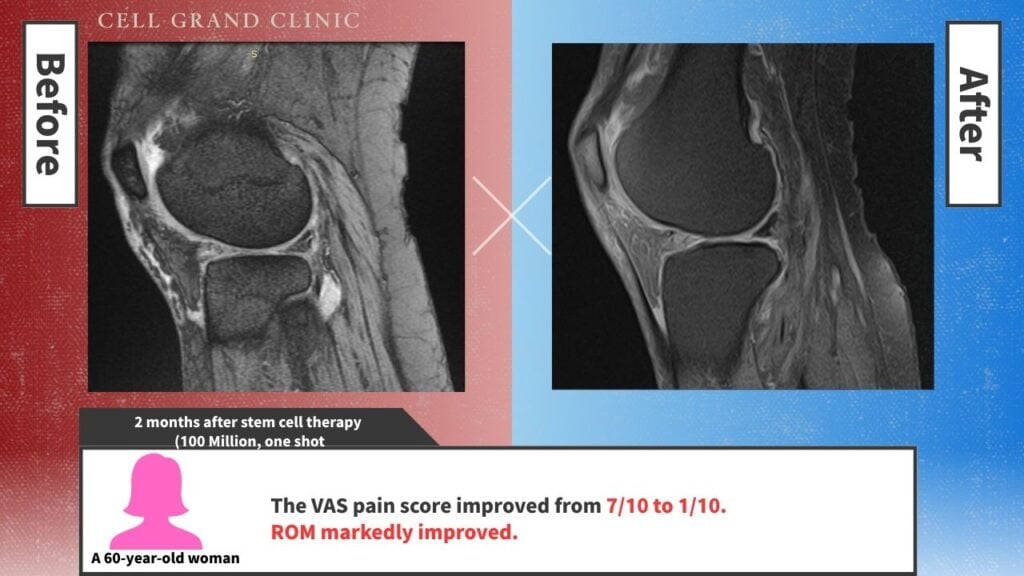
Because it is an outpatient treatment, patients do not typically require hospitalization, and the clinic describes it as a joint-preserving option for people who want to remain active while avoiding a more invasive surgical route. For patients researching knee pain treatment in Osaka, Japan, this approach may be appealing because it combines regenerative medicine, physician-led evaluation, and a treatment pathway designed to support mobility while preserving the natural knee joint.
🩺 Types of Knee Pain Treatment Approaches
- Knee Osteoarthritis-Focused Treatment – This is one of the most relevant treatment pathways for patients with degenerative knee changes. It is intended for individuals with cartilage wear, persistent stiffness, joint inflammation, and pain that interferes with walking, exercise, or daily activity. Patients with moderate osteoarthritis may be among the most appropriate candidates for regenerative knee treatment.
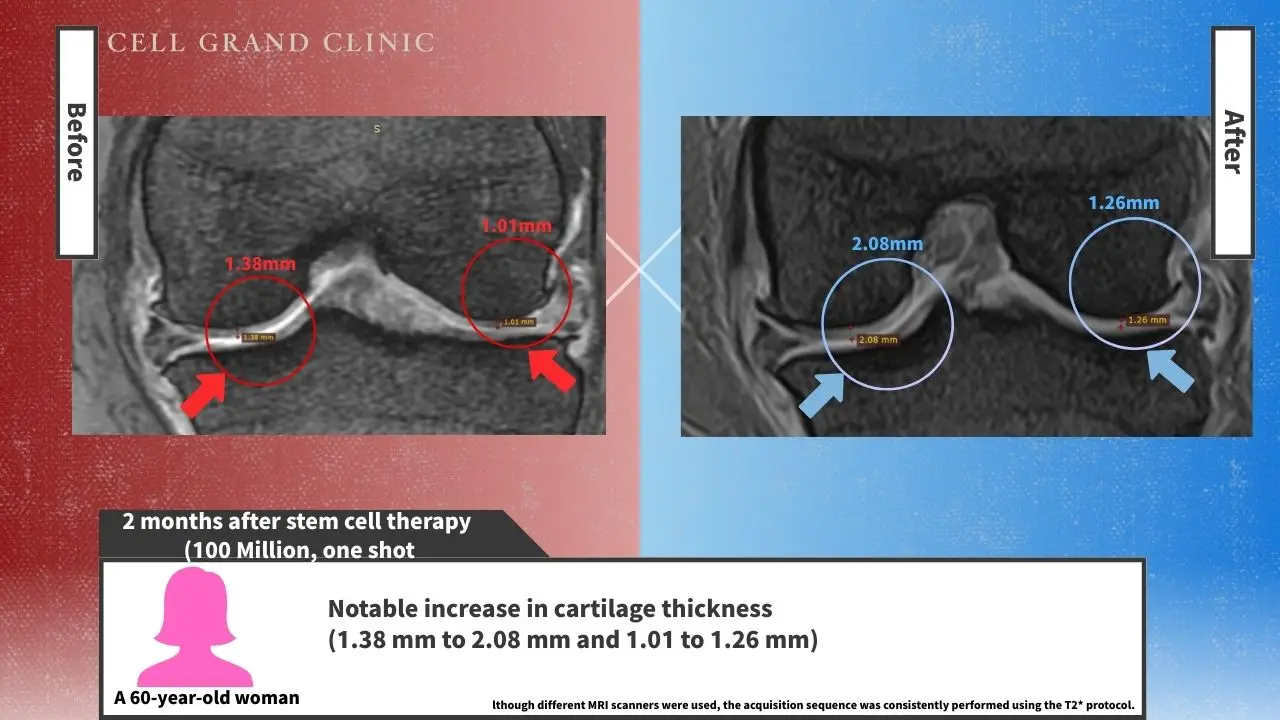
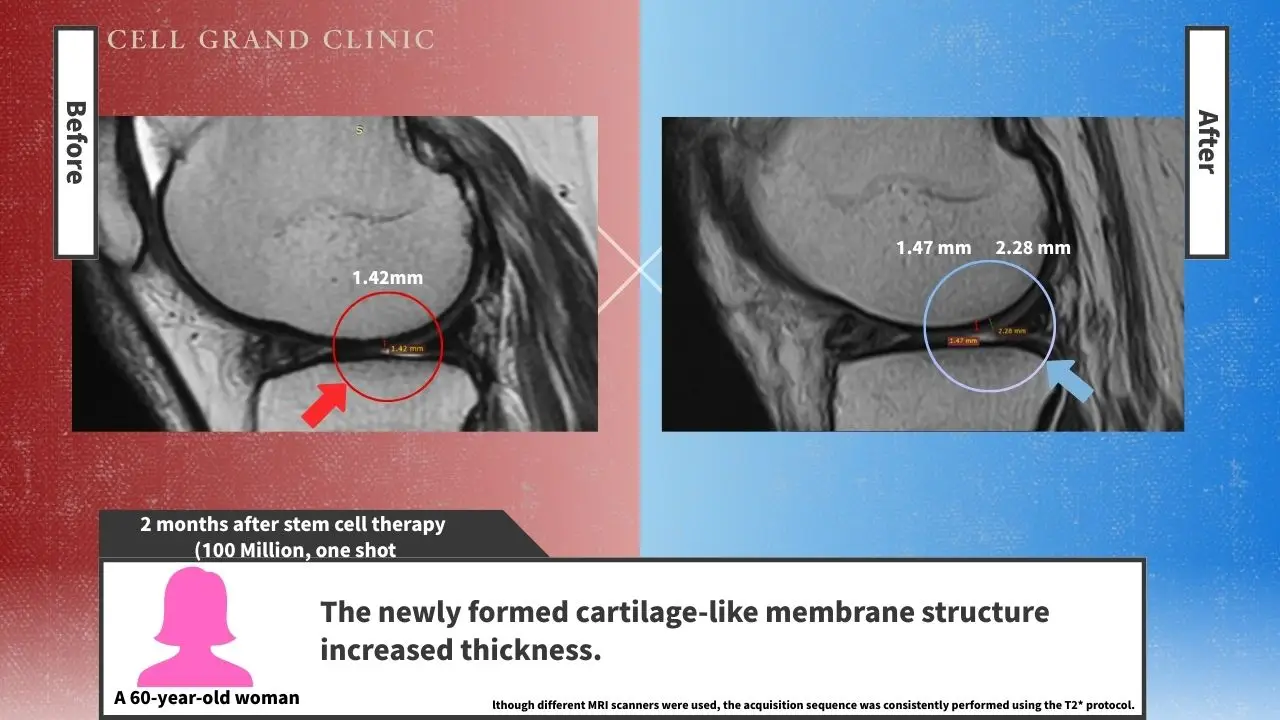
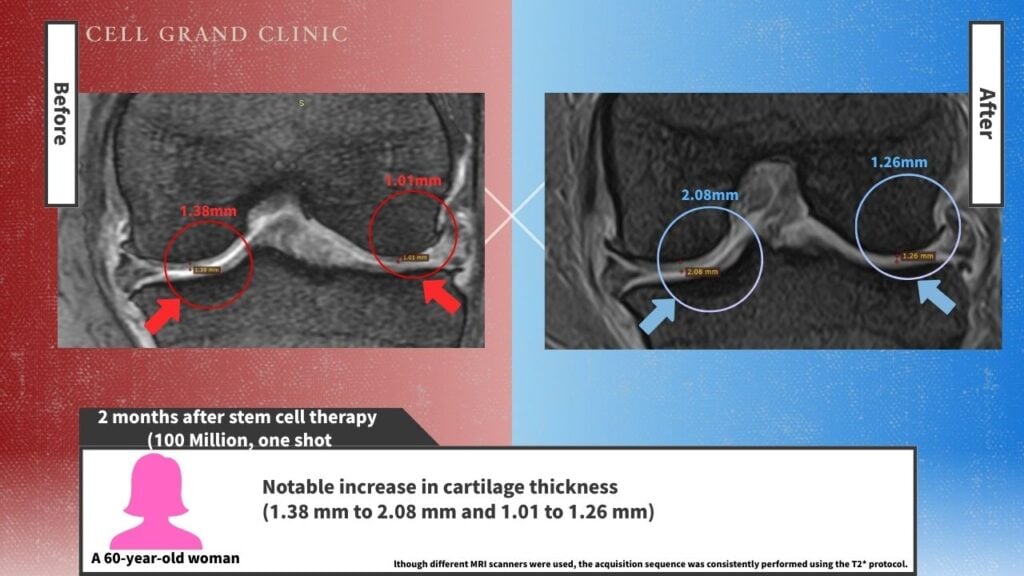
- Cartilage Support-Oriented Treatment – Some patients seek care because of cartilage thinning, joint surface wear, or imaging findings that suggest structural degeneration. In these cases, treatment is planned with the goal of supporting the knee joint environment and helping improve function while trying to preserve the natural knee structure.
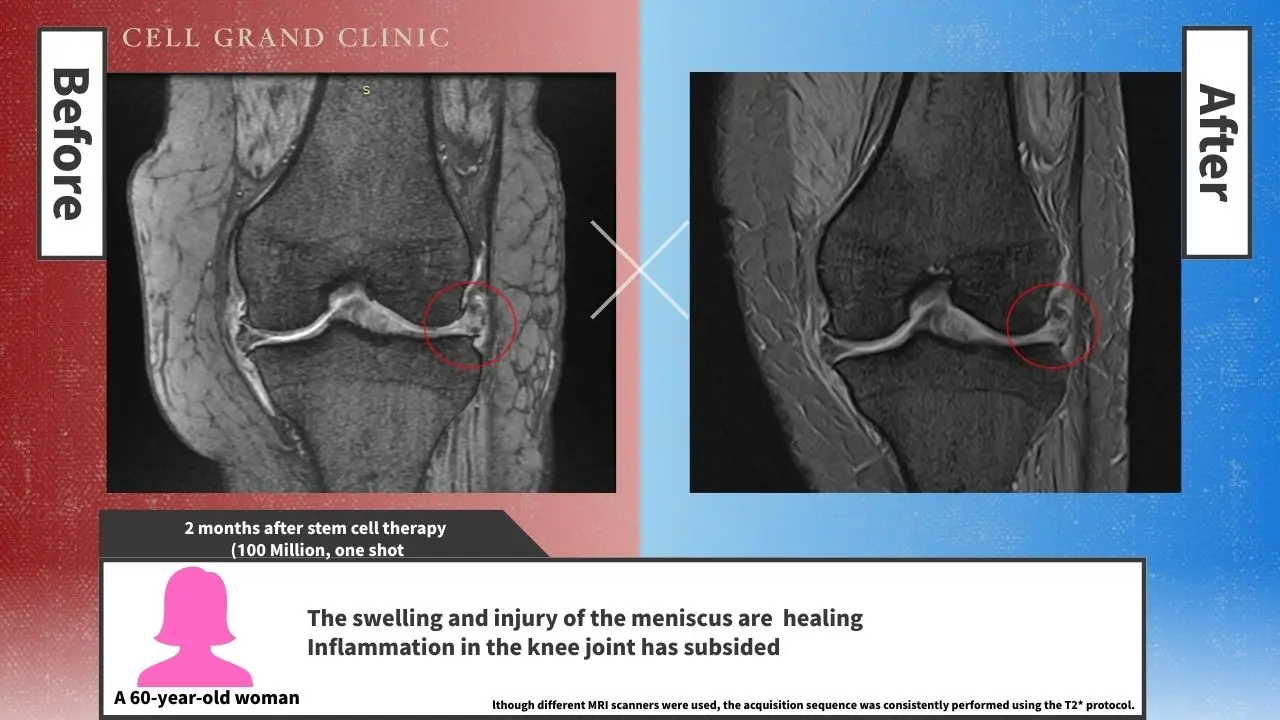
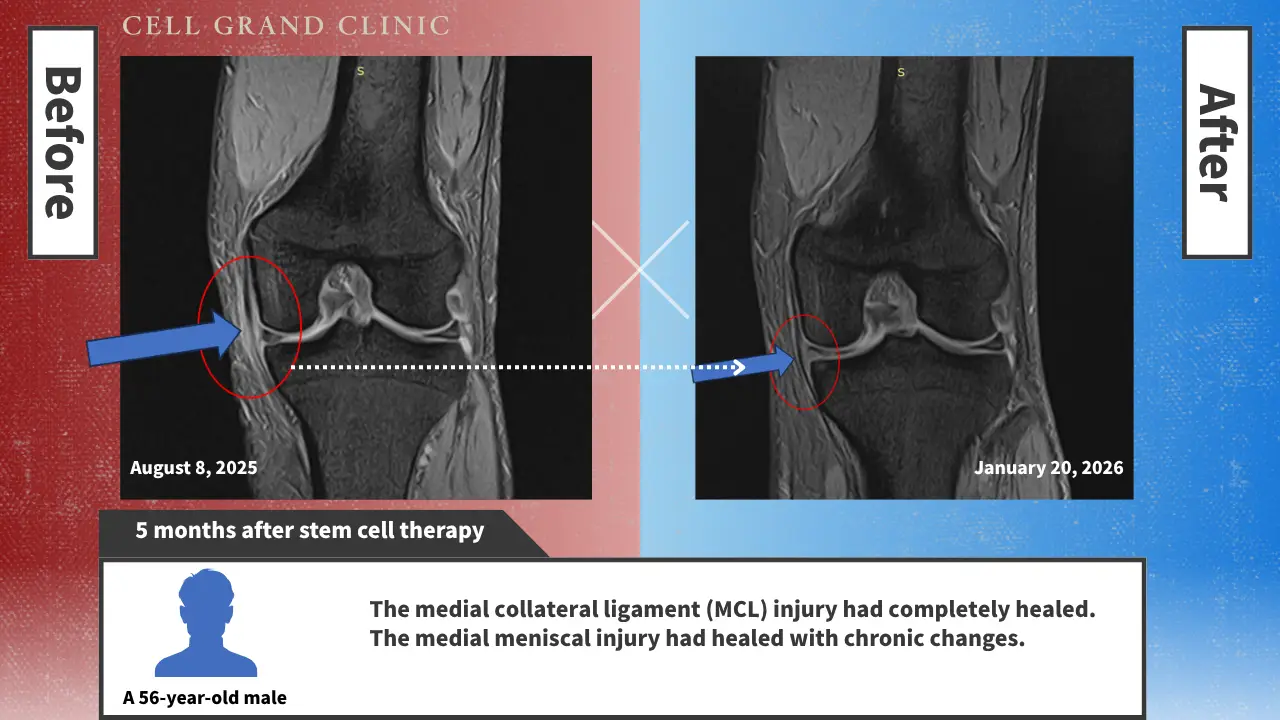
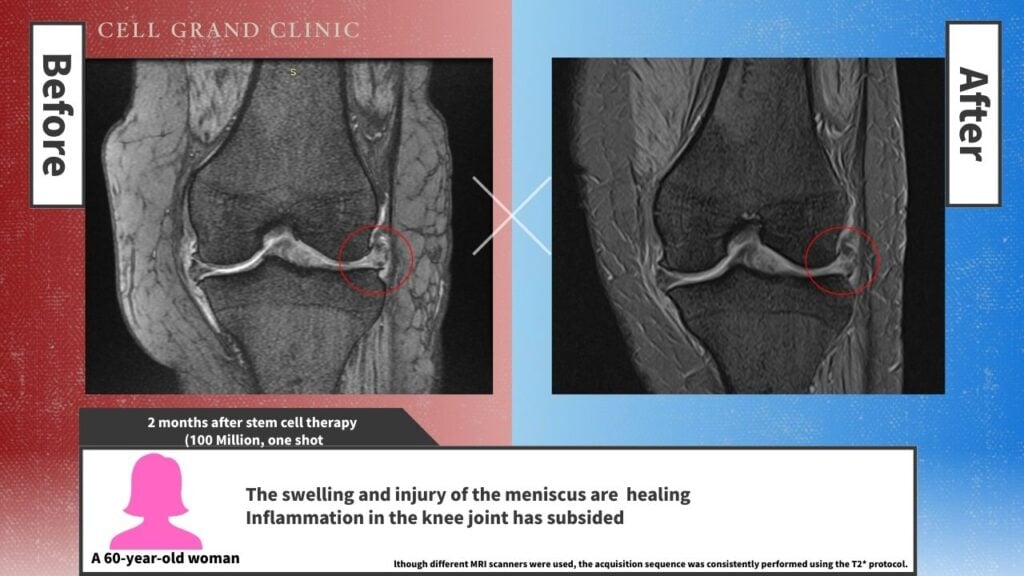
- Meniscal Injury-Related Knee Pain Treatment – Knee pain may also be associated with meniscal irritation, swelling, or chronic degenerative meniscal injury. For selected patients, regenerative treatment may be considered when the goal is to reduce inflammation, improve comfort, and support functional recovery without moving immediately to more invasive intervention.
- Mobility and Range of Motion Improvement Treatment – Some patients are most affected by stiffness, reduced flexibility, difficulty bending the knee, or limitations in physical activity. In such cases, knee pain treatment may be planned to support more comfortable movement and better range of motion as part of a broader functional improvement strategy.
- Joint Preservation Treatment for Surgery Avoidance – For patients who want to delay or avoid knee replacement surgery, regenerative knee pain treatment may serve as a joint-preserving option. This is especially relevant for active adults who want to continue walking, golfing, hiking, or maintaining an independent lifestyle without the recovery demands of major surgery.
🩺 Who Is a Good Candidate?
Knee pain treatment at Cell Grand Clinic may be suitable for patients who want a non-surgical option for chronic knee discomfort, degenerative joint changes, and reduced mobility. The clinic’s materials especially suggest this treatment for patients who want to preserve the natural knee joint and explore regenerative medicine before considering more invasive solutions.
✔️ Patients with knee osteoarthritis and ongoing joint pain
✔️ Individuals with moderate degenerative knee changes
✔️ Patients experiencing stiffness, swelling, or reduced knee flexibility
✔️ People with knee pain that affects walking, stairs, or exercise
✔️ Individuals with meniscal irritation or chronic meniscal changes
✔️ Patients seeking a non-surgical knee pain treatment option
✔️ Active adults who want to maintain sports or daily mobility
✔️ Individuals who want to delay or avoid knee replacement surgery
✔️ Patients who prefer outpatient treatment without hospitalization
✔️ People in stable general health and able to undergo assessment
📝 Consultation & Preparation
Consultation and preparation are essential parts of knee pain treatment at Cell Grand Clinic. Because regenerative knee therapy is individualized, the clinic evaluates each patient’s symptoms, clinical history, mobility limitations, and available imaging before confirming treatment suitability. This helps determine whether the patient may benefit from a regenerative approach and how the treatment should be planned.
The clinic also presents a structured pathway for international patients, which is helpful for those traveling to Osaka for care. The treatment plan is generally divided into an initial assessment, a first visit for fat harvesting, a cell culture period, and a second visit for knee administration. This staged approach allows treatment to be planned carefully rather than rushed.
✔️ Review of knee symptoms, pain pattern, and functional limitations
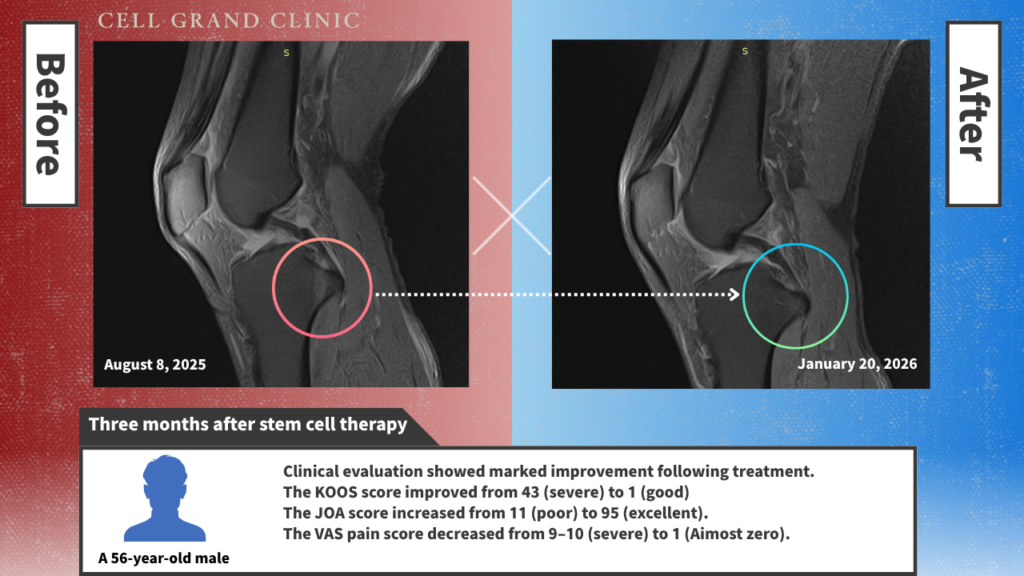
✔️ Evaluation of MRI or X-ray findings when available
✔️ Discussion of osteoarthritis severity and joint condition
✔️ Review of previous treatments such as injections, medication, or therapy
✔️ Medical history review to assess suitability for regenerative treatment
✔️ Explanation of how autologous adipose-derived stem cell therapy works
✔️ Preliminary consultation with the medical team before travel arrangements
✔️ Planning for Visit 1, including minimally invasive fat harvesting
✔️ Understanding the approximate seven-week cell culture period
✔️ Coordination for Visit 2 for direct intra-articular knee administration
🩺 Recovery & Aftercare
Recovery after non-surgical knee pain treatment at Cell Grand Clinic is designed to be much lighter than recovery after major knee surgery. Because the treatment is outpatient-based and does not require hospitalization, many patients value the convenience of returning to their hotel or accommodation shortly after the procedure. This is especially important for international patients who want advanced care with a less disruptive treatment timeline.
That said, recovery still requires proper care and realistic expectations. Improvement may not feel immediate in every case, because regenerative treatment works through a biological process rather than instant structural replacement. Patients should understand that healing response, comfort level, and improvement timeline can vary depending on the severity of knee damage, inflammation, activity level, and individual response.
✔️ Outpatient treatment with no hospitalization required
✔️ Walking is generally possible after the procedure
✔️ Mild post-procedure soreness may occur depending on the treatment stage
✔️ Temporary activity modification may be advised after administration
✔️ High-impact sports should be avoided during the early recovery period
✔️ Patients should follow all movement and rest instructions from the clinic
✔️ Improvement in pain and range of motion may develop gradually over time
✔️ Follow-up monitoring helps assess symptoms and functional progress
✔️ Recovery expectations may differ for moderate versus advanced knee damage
🌍 Why Choose Cell Grand Clinic for Knee Pain Treatment in Osaka?
Choosing the right clinic for knee pain treatment is about more than availability. Patients looking for regenerative knee therapy often want strong medical oversight, careful cell processing, a clear legal framework, and an approach that supports both safety and long-term joint preservation. Cell Grand Clinic positions itself as a premium option in Osaka for patients seeking advanced, non-surgical knee pain treatment in Japan.
The clinic’s materials emphasize that treatment is performed within Japan’s regulated regenerative medicine environment. They also highlight physician leadership, English communication for international patients, outpatient convenience, and a treatment process built around cultured autologous stem cells. For patients comparing knee pain treatment abroad, these are important trust factors.
✔️ Non-surgical knee therapy designed to preserve the natural joint
✔️ Regenerative medicine approach using autologous adipose-derived stem cells
✔️ Outpatient treatment with no hospitalization or major knee surgery required
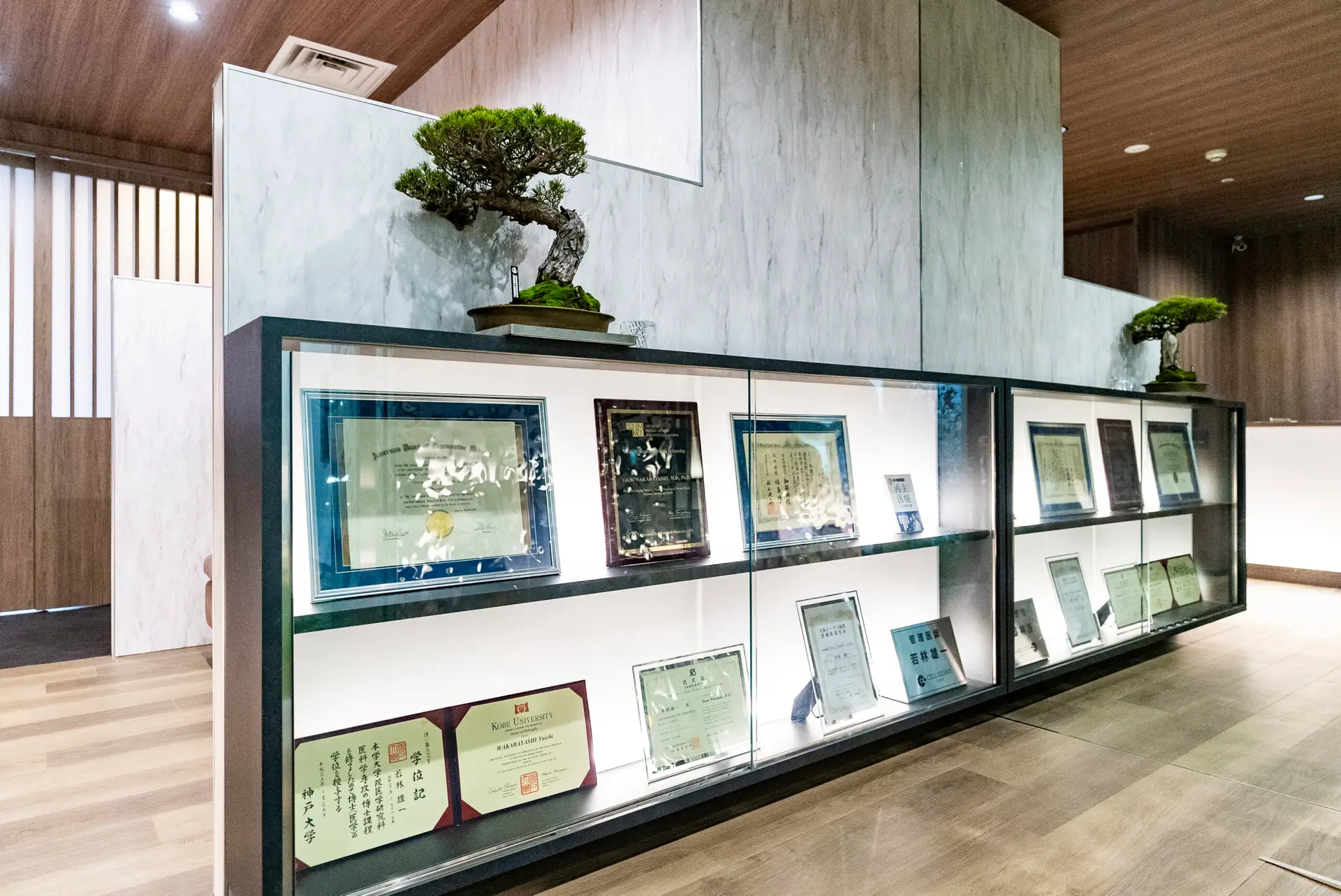
✔️ Treatment led by Dr. Yuichi Wakabayashi
✔️ Doctor of Medicine credentials in Japan and regenerative medicine focus
✔️ English-speaking support for international patients
✔️ Structured treatment journey for overseas visitors
✔️ Government-certified cell processing framework highlighted by the clinic
✔️ Approximately seven-week culture process before knee administration
✔️ Focus on pain relief, range of motion support, and joint function